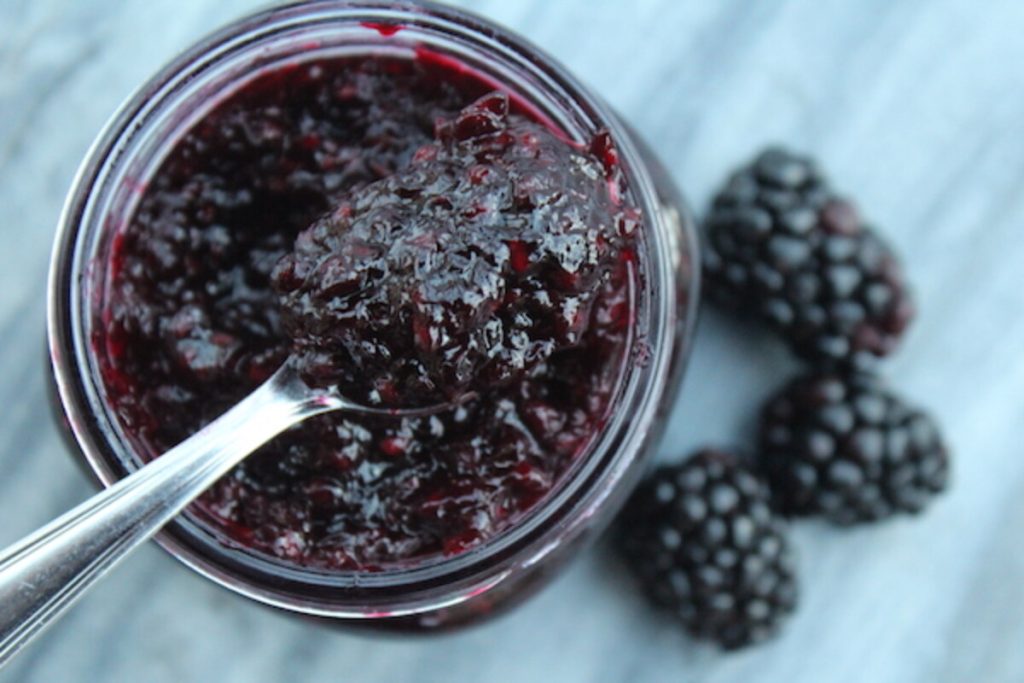
Learn how to make an easy homemade blackberry jam recipe without pectin using just fresh blackberries and sugar. This simple two-ingredient jam has an intense berry flavor and thickens naturally, making it the perfect way to preserve summer’s sweetest berries.
Choosing Blackberries for Jam
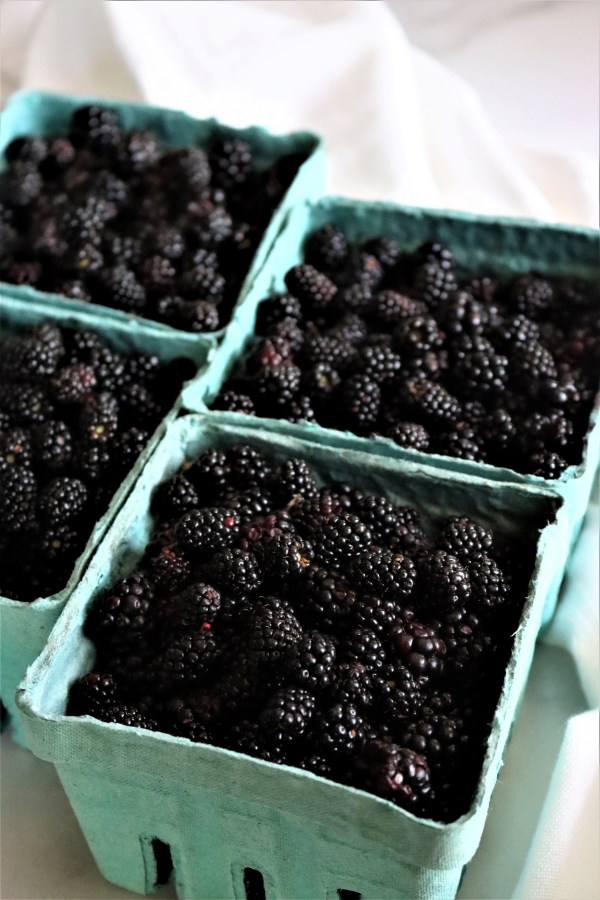
Any type of blackberry works well in this blackberry jam recipe without pectin, including wild, cultivated, or frozen berries.
1. Wild Blackberries
Wild blackberries contain more natural pectin and have firmer fruit, so the berries often stay whole in the finished jam unless you mash them during cooking. If you’re foraging wild blackberries (or related species such as dewberries), pick them fully ripe. Slightly underripe berries can be quite tart and don’t release their juice as easily.
2. Cultivated Blackberries
Cultivated blackberries are usually juicier and sweeter than wild berries. They tend to break down during cooking, creating a smoother, more spreadable jam. Because they are sweeter, you may want to add a small splash of lemon juice to balance the flavor.
3. Frozen Blackberries
Frozen blackberries also work well for making jam. However, freezing breaks down some of the fruit’s natural pectin, so the jam may have a slightly softer set and produce a somewhat lower yield compared to fresh berries.
Sugar Options for Blackberry Jam
One of the best things about this blackberry jam recipe without pectin is its flexibility. You can adjust the amount of sugar to suit your taste, from a low-sugar preserve to a traditional sweet jam.
1. Perfect Blackberry Jam (Recommended)
Use 4 cups sugar to 6 cups mashed blackberries. This ratio is currently recommended by the National Center for Home Food Preservation and provides an excellent balance between sweetness and fresh blackberry flavor. The jam sets well while still tasting richly fruity.
2. Low-Sugar Blackberry Jam
Use 2 cups sugar to 6 cups mashed blackberries. This version creates a pleasantly tart, fruit-forward jam with a good set. It’s an excellent choice if you prefer less sweetness but still want a high-quality homemade preserve.
3. Old-Fashioned High-Sugar Jam (Traditional)
Use equal parts sugar and mashed fruit. This traditional version produces a very sweet jam with a firm set and a slightly higher yield. While it’s sweeter than many modern recipes, some people love the nostalgic flavor and candy-like consistency.
4. Using Honey or Maple Syrup
You can also sweeten blackberry jam with honey or maple syrup instead of granulated sugar. Because these sweeteners are sweeter by volume, start with about two-thirds of the amount of sugar called for in the recipe and adjust to taste. A candy thermometer can be especially helpful, as the visual cues for doneness are a little harder to judge when using alternative sweeteners.
No matter how much—or how little—sugar you use, this blackberry jam remains safe for water bath canning because blackberries are naturally high in acid.
Ingredients for Blackberry Jam
- Fresh Blackberries: About 3 pounds (12 cups as purchased) to yield roughly 6 cups mashed fruit. Any variety works, including wild, cultivated, or frozen blackberries.
- Sugar: Use 2–6 cups, depending on your preferred sweetness level (see ratios above). The recipe uses 4 cups for a balanced, classic flavor.
- Lemon Juice (Optional): 1–2 tablespoons of fresh lemon juice enhances flavor and balances sweetness, especially with cultivated berries. It is optional since blackberries are already naturally acidic enough for canning. Fresh lemon juice is preferred; bottled is not required.
How to Make Blackberry Jam Without Pectin
Making blackberry jam without pectin is simple, but it requires attention during cooking. The total process takes about 30–40 minutes.
- Preparing the Berries
Rinse and sort the blackberries, removing stems, leaves, or damaged fruit. Place them in a large mixing bowl or directly in your jam pot, then crush them using a potato masher. As a general guide, 2 cups of whole berries yield about 1 cup of mashed fruit.
- Cooking the Jam
Add the mashed blackberries and sugar to a large, deep jam pot. If using lemon juice, stir it in at this stage
Bring the mixture to a boil over medium-high heat, stirring frequently. Blackberry jam foams quite a bit during cooking, so use a deep pot and keep a close watch to prevent overflow.
Some cooks add a small amount of butter (about ¼ teaspoon) to help reduce foaming. While this is considered safe for canning, I usually skip it. Keeping a steady stir is enough to control foam naturally, and the National Center for Home Food Preservation also notes that butter may introduce off-flavors during long-term storage.
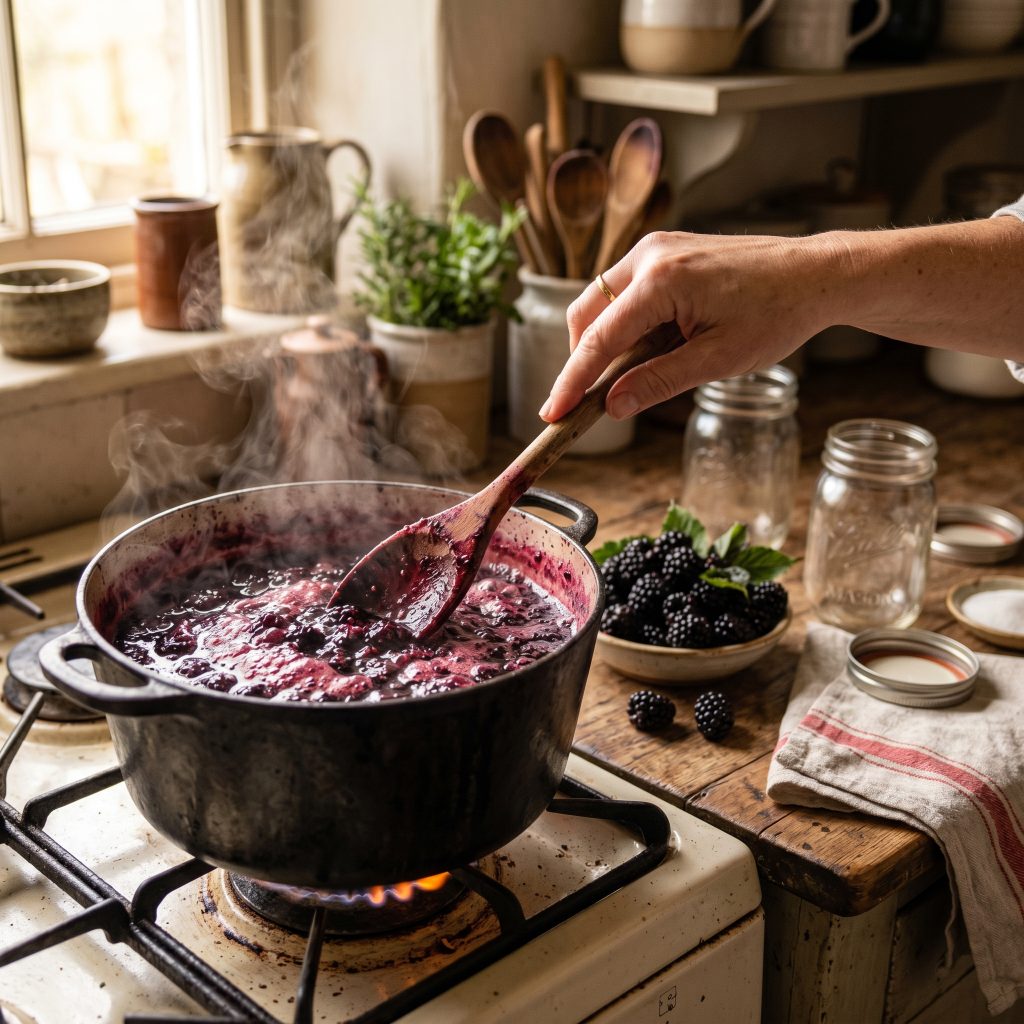
Continue cooking the jam for 20–30 minutes, stirring constantly and scraping the bottom of the pot to prevent scorching. As it cooks, the foam will gradually subside and the mixture will become thicker and more glossy.
At this stage, the jam will start to noticeably change in texture—it will look heavier in the pot and begin to sheet off the spoon. This is your signal that you’re approaching the gel stage, where the natural pectin in the blackberries is doing its work.
Testing for Gel Stage
There are several reliable ways to check whether your blackberry jam has reached the proper gel stage. Using more than one method gives the most accurate result.
- Freezer Plate Test: Before you start cooking, place a small plate in the freezer. When you think the jam is ready, spoon a small amount onto the cold plate and wait about 30 seconds. Run your finger through it—if the jam wrinkles and holds a clear line, it has set. If it runs back together, continue cooking.
- Temperature Test: Use an instant-read or candy thermometer. Jam typically sets at 220°F (104°C) at sea level. If you are at higher elevation, subtract about 2°F for every 1,000 feet (300 meters) above sea level.
- Sheeting Test: Dip a spoon into the boiling jam and lift it above the pot. Watch how it falls off the spoon. If it drops in a single sheet or thick, slow blobs rather than thin droplets, it is likely ready.
- Important Tip: Avoid overcooking the jam. Once it passes the gel stage, it can quickly become too thick or stiff. If you are unsure, it is better to remove it from the heat slightly early rather than too late.
Canning Blackberry Jam
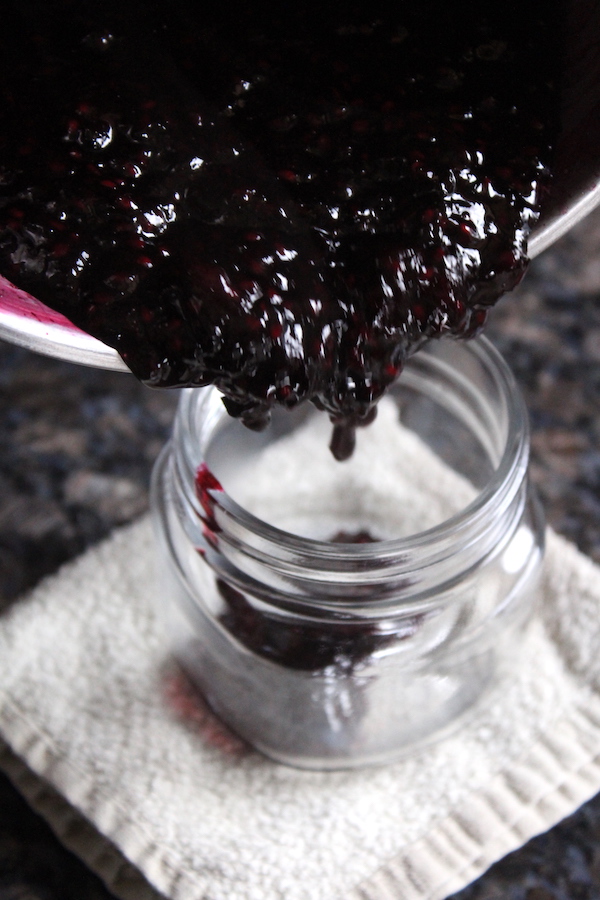
Once your jam reaches gel stage, remove it from the heat. If needed, skim off any remaining foam for a clearer finish.
Carefully ladle the hot jam into prepared canning jars, leaving ¼ inch (0.6 cm) headspace at the top. Use a clean, damp cloth to wipe the rims of the jars to ensure a proper seal. Place the lids on top and secure the rings until fingertip-tight. Process the filled jars in a boiling water bath canner, making sure the jars are fully covered by at least 1–2 inches of water. Once the water reaches a rolling boil, process for the recommended time based on your altitude and jar size.
After processing, remove the jars and let them cool undisturbed for 12–24 hours. You should hear the lids “pop” as they seal. Check the seals before storing; any unsealed jars should be refrigerated and used first.Properly sealed blackberry jam can be stored in a cool, dark place for long-term preservation.