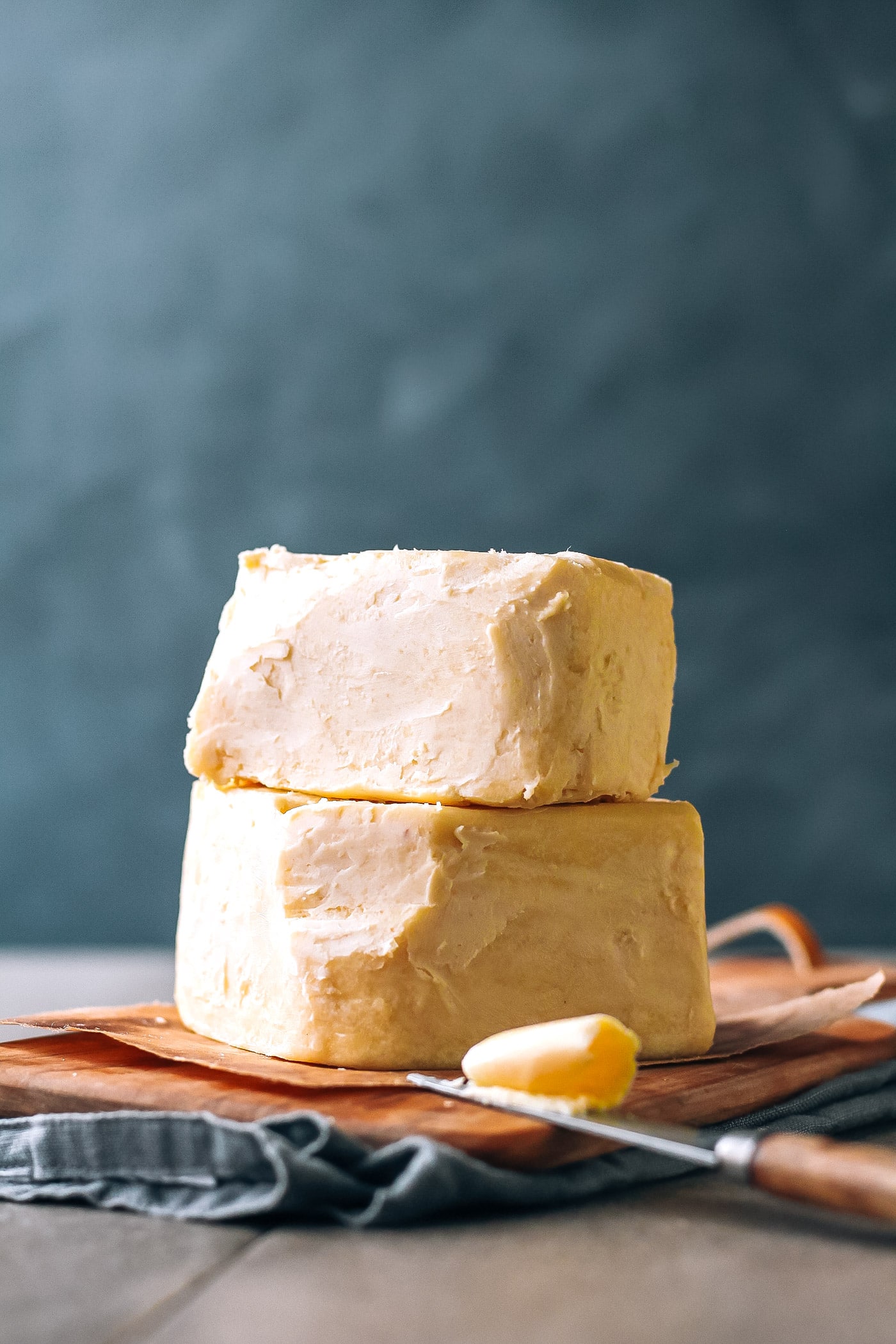
Learn how to make your own vegan butter at home—it smells, tastes, and spreads just like real dairy butter! It melts beautifully, works perfectly in baking, and is more affordable than store-bought versions. Plus, you know exactly what’s inside.
Having already mastered vegan camembert, blue cheese, and yogurt, it was only a matter of time before I turned my attention to butter. It’s starting to feel like a full-fledged creamery over here!
This recipe has been a long time coming. I kept tweaking it because I wasn’t entirely satisfied with the texture. I tried countless vegan butter recipes, but none of them quite captured that authentic dairy butter aroma, taste, and spreadability. So, I took matters into my own hands.
While I can’t claim to have invented cultured vegan butter—others have used yogurt for tanginess—I’m proud of this version. It’s flavorful, has the perfect texture, and is completely soy-free, dairy-free, and palm oil-free. Did I mention it melts like the real thing?
What I discovered during my research is that butter is actually a fermented product! Who knew? But since we’re already comfortable with fermentation, making this butter is surprisingly straightforward.

📘 Why Make Your Own Butter?
There are several compelling advantages to making your own vegan butter from scratch:
- Cost-effective: Homemade is significantly cheaper than premium store-bought vegan butters.
- Full ingredient control: No preservatives, artificial flavors, or hydrogenated oils.
- Customizable flavor: Adjust the saltiness, tanginess, or add herbs and spices.
- Fresh and delicious: The cultured process creates a depth of flavor that’s hard to replicate commercially.
- Soy-free, dairy-free, and palm oil-free: Perfect for those with dietary restrictions or ethical preferences.
🥥 Ingredient Notes
This vegan butter recipe requires just 7 simple ingredients. Here’s what you’ll need:
- Raw cashews: The base for the creamy, cultured milk.
- Water: For blending the cashew milk.
- Probiotic powder or yogurt starter: Essential for culturing and developing that tangy, buttery flavor.
- Coconut oil: Provides the solid, spreadable texture. Use refined for a neutral flavor.
- Sunflower or canola oil: Adds to the creamy consistency and helps with spreadability.
- Sunflower lecithin: The key emulsifier that prevents separation and creates a smooth, cohesive butter.
- Sea salt: Enhances the flavor—use fine salt for even distribution.
🥣 How to Make It
This recipe consists of two steps: 1) Making the fermented cashew milk and 2) Blending it with the rest of the ingredients.
Step 1: Prepare the Cultured Cashew Milk

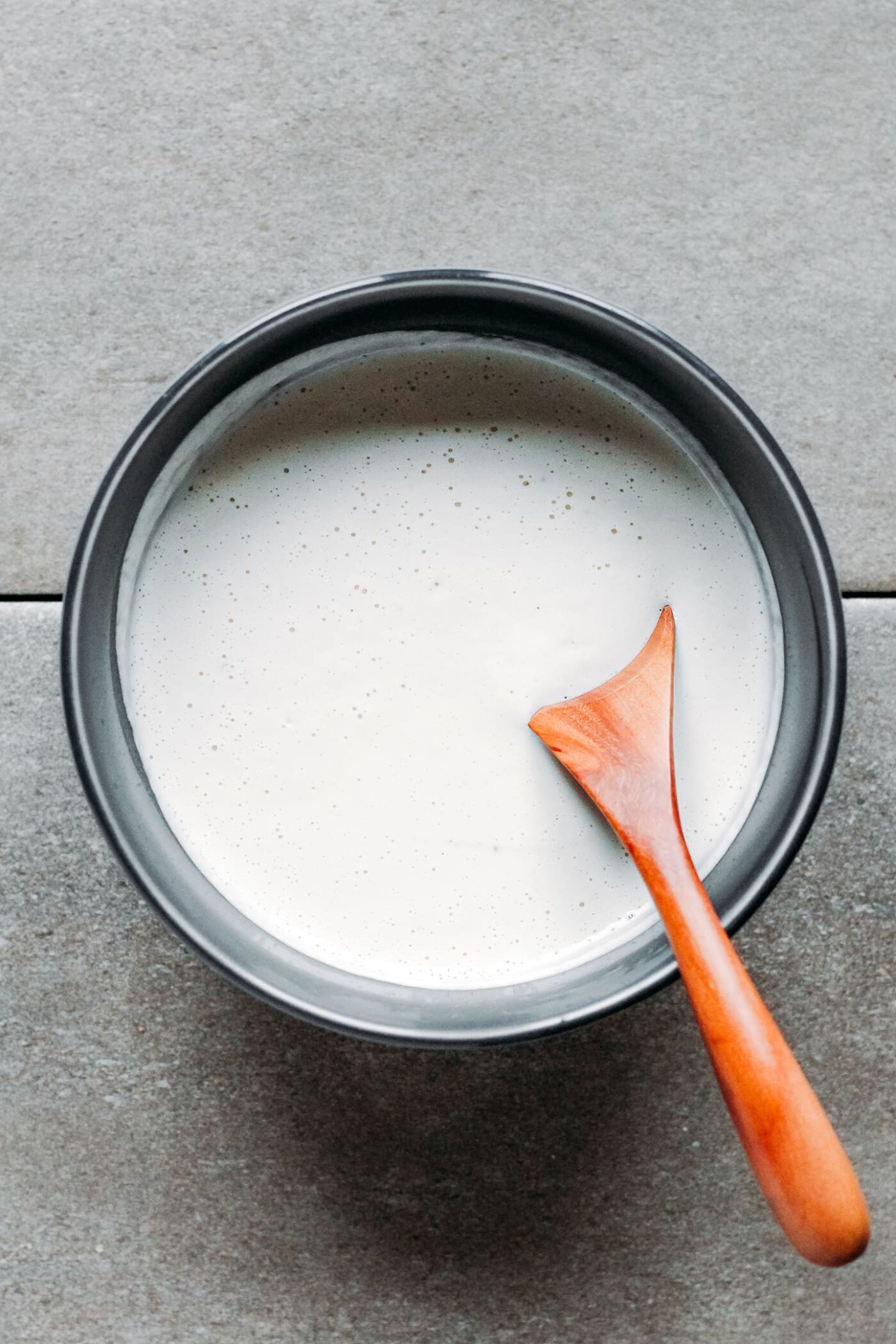
Why Culture the Cashew Milk?
Culturing the cashew milk is the secret to creating butter that smells and tastes like the real thing. The fermentation process develops:
- A tangier taste that mimics dairy butter’s subtle sourness
- A more complex body with deeper flavor notes
- A richer texture that feels satisfying and authentic
Step 2: Make the Butter
The final step is preparing the butter itself by blending the cultured cashew milk with the remaining ingredients.
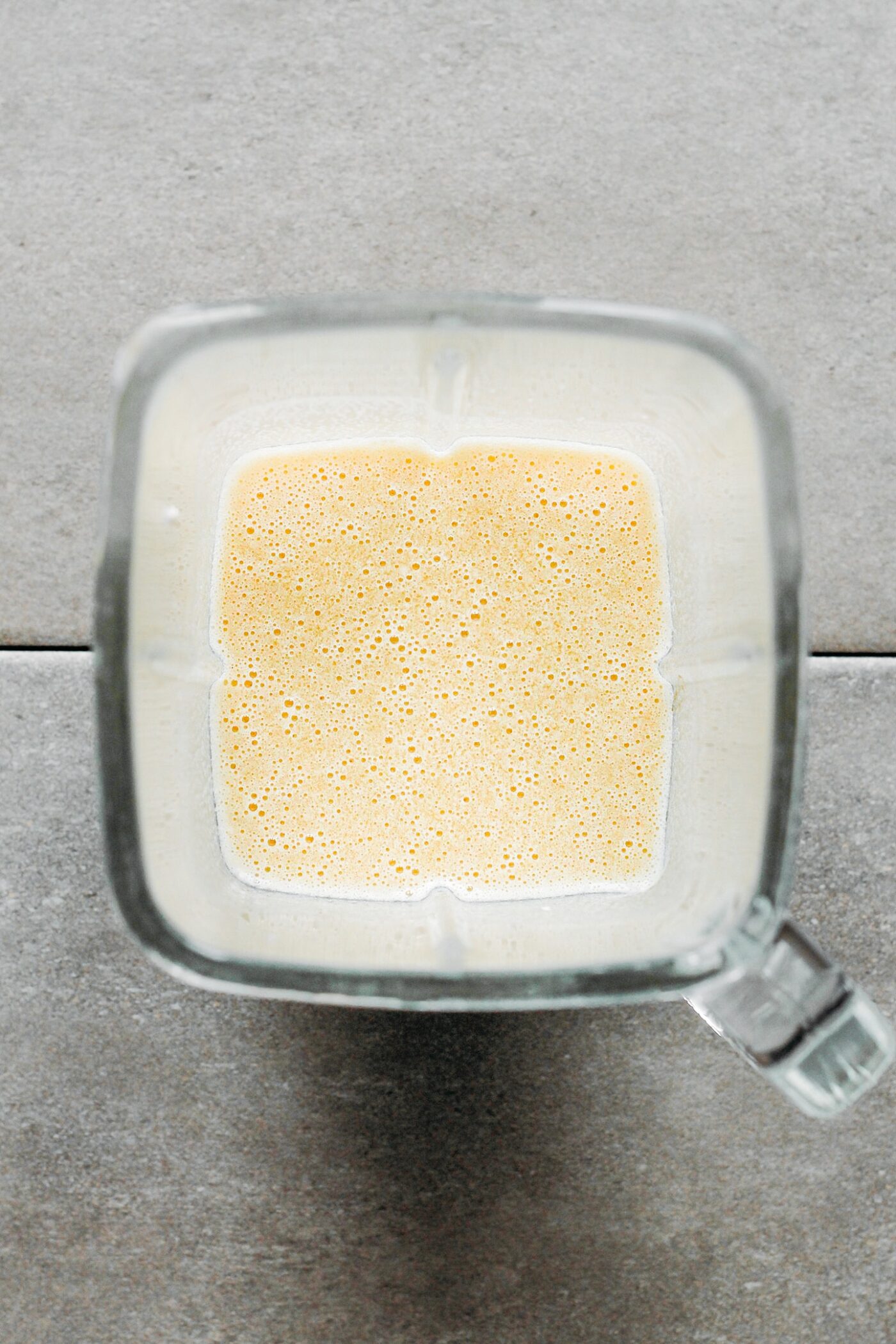
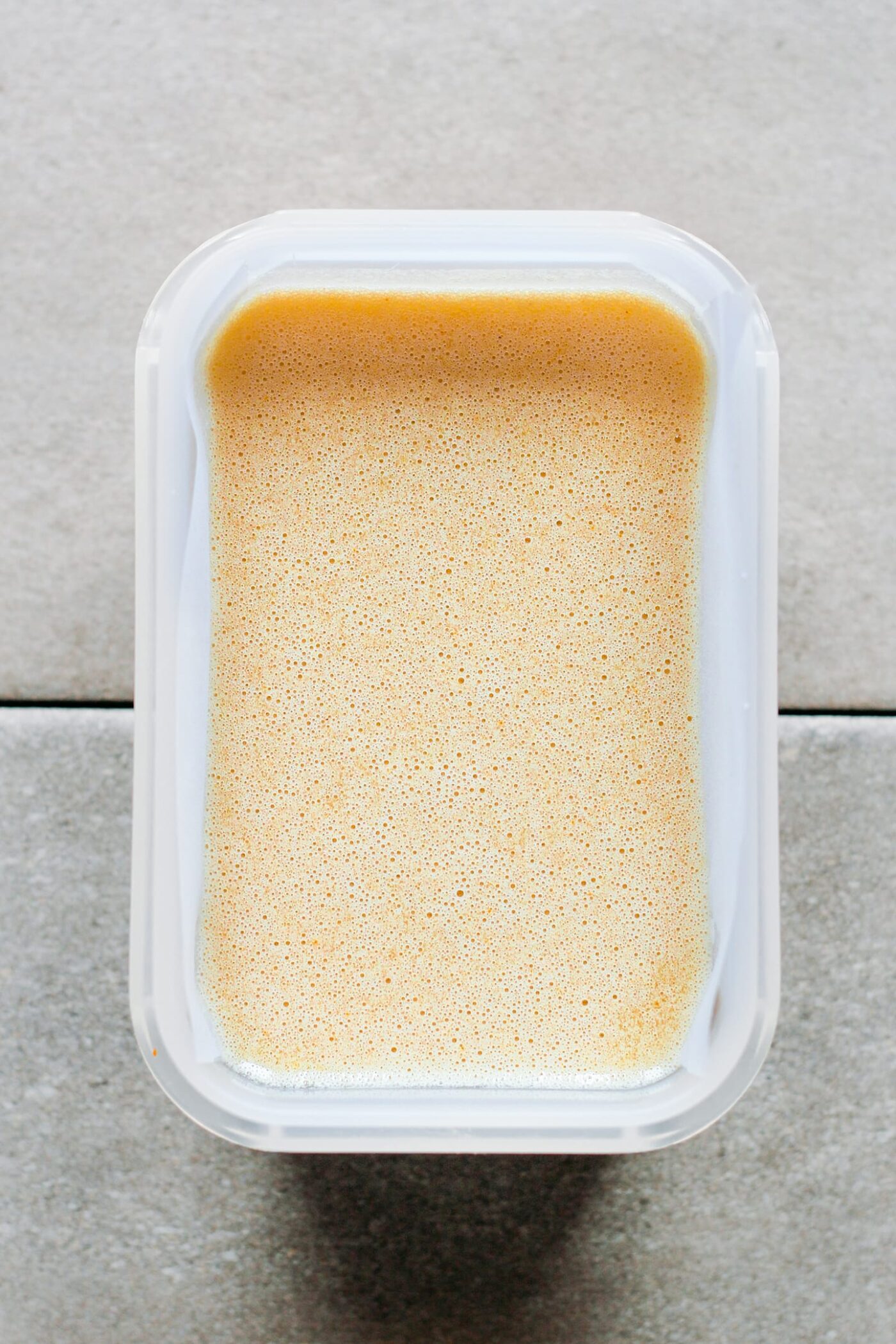
Since this butter is traditionally cultured, it has a shorter shelf life than margarine. Store it in the refrigerator for up to 7 days.
❄️ Freezing
This vegan butter freezes beautifully! Keep it for up to 2 months in the freezer. I recommend cutting it into small cubes and thawing only what you need at a time.
🥞 Where to Use It
You already know the classics, but here are some delicious ways to use your homemade butter:
- Spread on warm toast, bagels, or fresh bread
- Melt over steamed vegetables, popcorn, or baked potatoes
- Use in baking for cookies, cakes, and pastries
- Pan-fry or sauté vegetables for added richness
- Make a creamy, dairy-free butter sauce for pasta

📔 Pro Tips for Success
Use refined coconut oil.
If you prefer a neutral butter flavor, opt for refined coconut oil instead of virgin. Virgin coconut oil will give your butter a subtle coconut taste.
Don’t skip the lecithin.
Sunflower lecithin is essential for emulsification. Without it, the oils and cashew milk will separate.
Watch the fermentation time.
Ferment the cashew milk for the recommended time—too short and it won’t develop flavor, too long and it can become overly tangy.
Chill before using.
Let the butter set in the refrigerator for at least 4 hours before using. It will firm up beautifully and become spreadable.
💬 Frequently Asked Questions
Can I make this without sunflower lecithin?
Unfortunately, no. Lecithin is essential for emulsifying the oils and cashew milk, preventing separation, and creating that smooth, cohesive texture.
Can I skip the culturing step?
Yes, if you’re short on time, you can skip the fermentation and simply use the cashew cream. Your butter won’t have that authentic buttery tang, but it will still be delicious!
Does this butter melt?
Absolutely! It melts just like real dairy butter, so you can use it for sauces, cooking, and baking without any issues.
Will it work in baking recipes?
While I haven’t personally tested it in every recipe, I have no doubt it will work just like regular butter in most baking applications.
How long does it keep?
It will keep for about one week in the refrigerator. After that, I find the flavor becomes a bit too tangy.
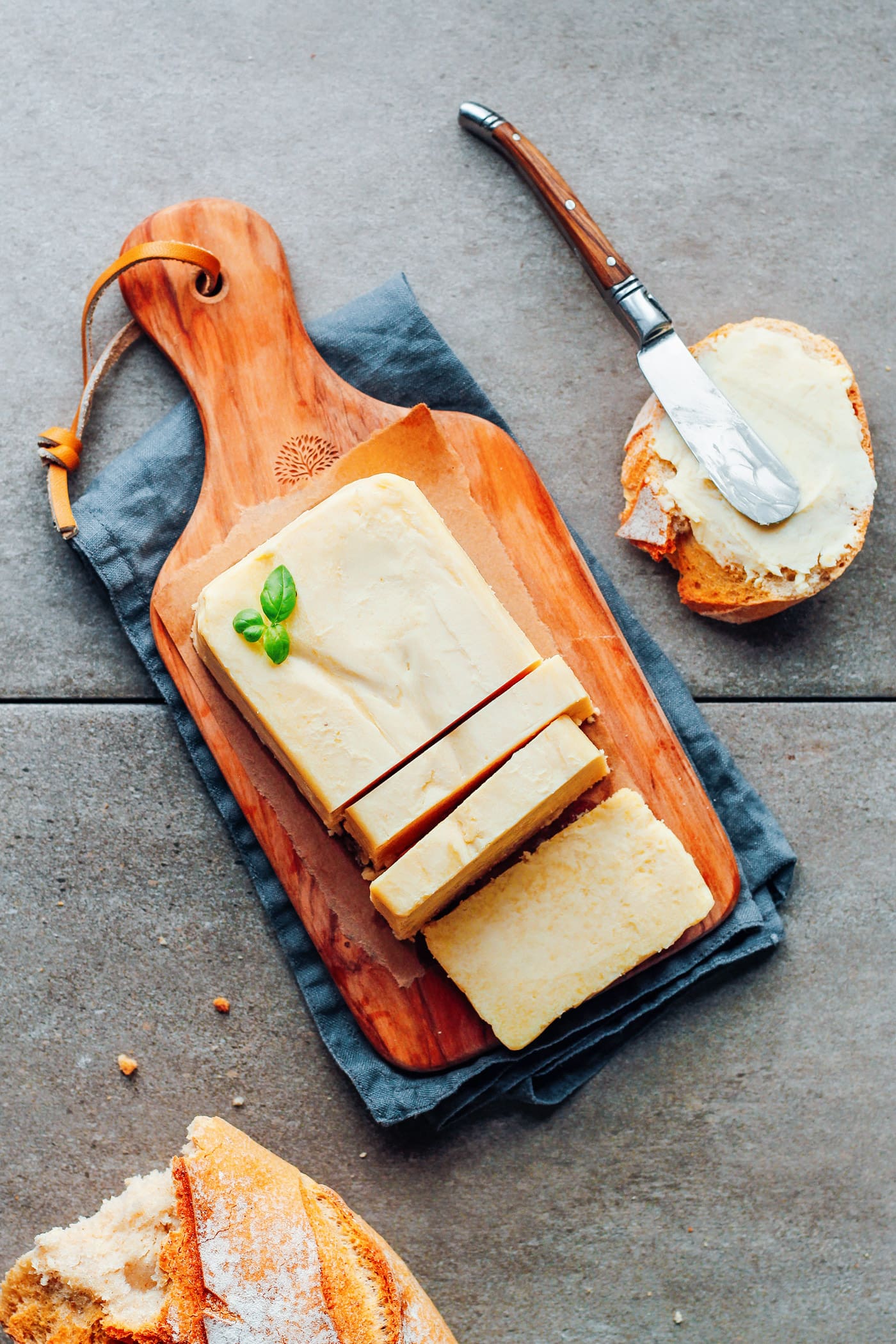
I hope you’ll love this plant-based butter as much as I do! With over 75 ★★★★★ ratings, it’s definitely a must-try. Thick, creamy, and soft, this vegan butter has the perfect texture—spreadable right from the fridge and wonderful in baked goods!
Homemade Vegan Cultured Butter
Ingredients
For the Cultured Cashew Milk
- 1 cup raw cashews (soaked for 4 hours or overnight)
- 1/2 cup water
- 1 probiotic capsule (or 1/4 tsp yogurt starter culture)
For the Butter
- 1 cup refined coconut oil (melted)
- 1/4 cup sunflower oil (or canola oil)
- 2 tbsp cultured cashew milk (from above)
- 1 tbsp sunflower lecithin (liquid or granules)
- 1/2 tsp fine sea salt
Instructions
- Soak the cashews: Place the raw cashews in a bowl and cover with water. Soak for 4 hours or overnight. Drain and rinse well.
- Blend the cashew milk: In a high-speed blender, combine the soaked cashews, water, and the contents of the probiotic capsule. Blend until completely smooth and creamy.
- Ferment the cashew milk: Transfer the mixture to a clean glass jar. Cover loosely with a lid or cloth. Let it sit at room temperature (70-75°F / 21-24°C) for 12-24 hours, until it has developed a tangy aroma and slightly thickened.
- Refrigerate: Once fermented, refrigerate the cashew milk for at least 1 hour to chill.
- Make the butter: In a blender or food processor, combine the chilled cultured cashew milk (use only 2 tablespoons), melted coconut oil, sunflower oil, sunflower lecithin, and salt. Blend until the mixture is completely smooth and emulsified.
- Chill: Pour the butter mixture into a glass jar or mold. Refrigerate for at least 4 hours, until firm.
- Serve: Use as you would regular butter. Store in the refrigerator for up to 7 days.
Notes
- Lecithin: This is essential for emulsification. Do not skip it.
- Flavor variations: Add herbs, garlic powder, or smoked salt for flavored butters.
- Freezing: Freeze for up to 2 months. Cut into cubes for easy portioning.
- Coconut flavor: Use refined coconut oil for a neutral taste. Virgin coconut oil will add a subtle coconut flavor.