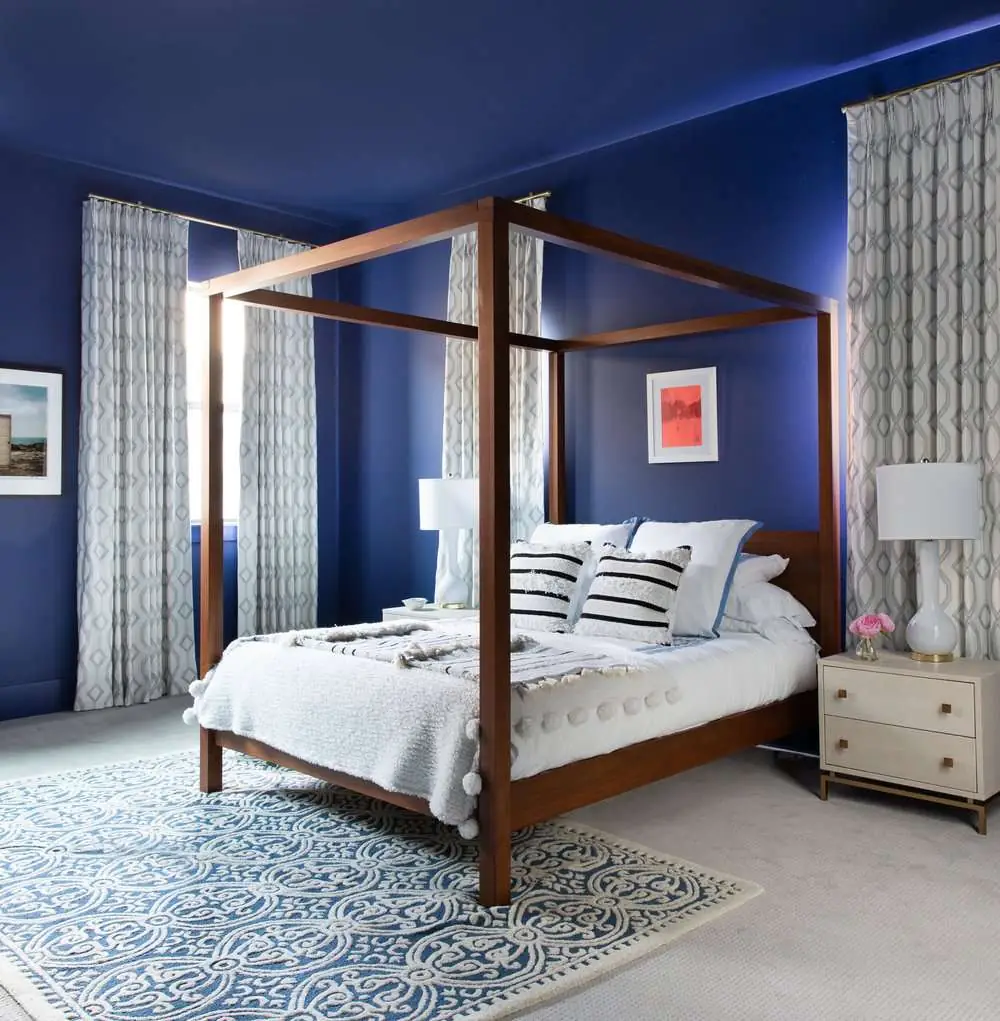
Every small-room inspiration photo seems to be shot in a space twice the size of yours. After digging through hundreds of options, from budget IKEA and Target finds to investment pieces at West Elm, we landed on 26 ideas that are genuinely achievable, not just pretty. This list leans into cozy, minimalist, and smart functional layouts that squeeze the most out of every square foot.
In 2026, a small room stands out through personality and smart function, not another coat of white paint. We are starting with the fastest, cheapest wins and building toward the bigger investment pieces, so jump to whatever fits your timeline and budget. Stick around for the mistakes near the end that can undo an otherwise great small-room plan.
1. Start With a Free Digital Mood Board
The hardest part of any redesign is usually just getting started. A digital mood board is the lowest-stakes way to organize your ideas before you spend a dime, and the whole process takes about an hour.
Be honest: a quick weekend refresh can spiral into a month-long project without a clear plan. It is tempting to grab a new duvet cover and call it done, but small, unconnected changes usually make a room feel more scattered, not less. Spending an hour on a mood board before buying anything saves time, money, and the hassle of returning pieces that do not actually work together. It is the unglamorous step that makes the final result feel intentional instead of thrown together.
2. Energize an Off-White Room with Deep Green Accents
You do not need a big budget for this fresh, eclectic look. Start with a simple white bed and desk from IKEA for under $400 total. The personality comes from the accents. Skip the pricey velvet ottoman and find a similar deep green one on Facebook Marketplace or at Target for around $70. Swap the abstract spotted rug for a comparable style from Wayfair for under $100, and pick up convincing faux hanging plants from Michael’s or a craft store for about $15 each. All in, this whole look comes together for well under $650.
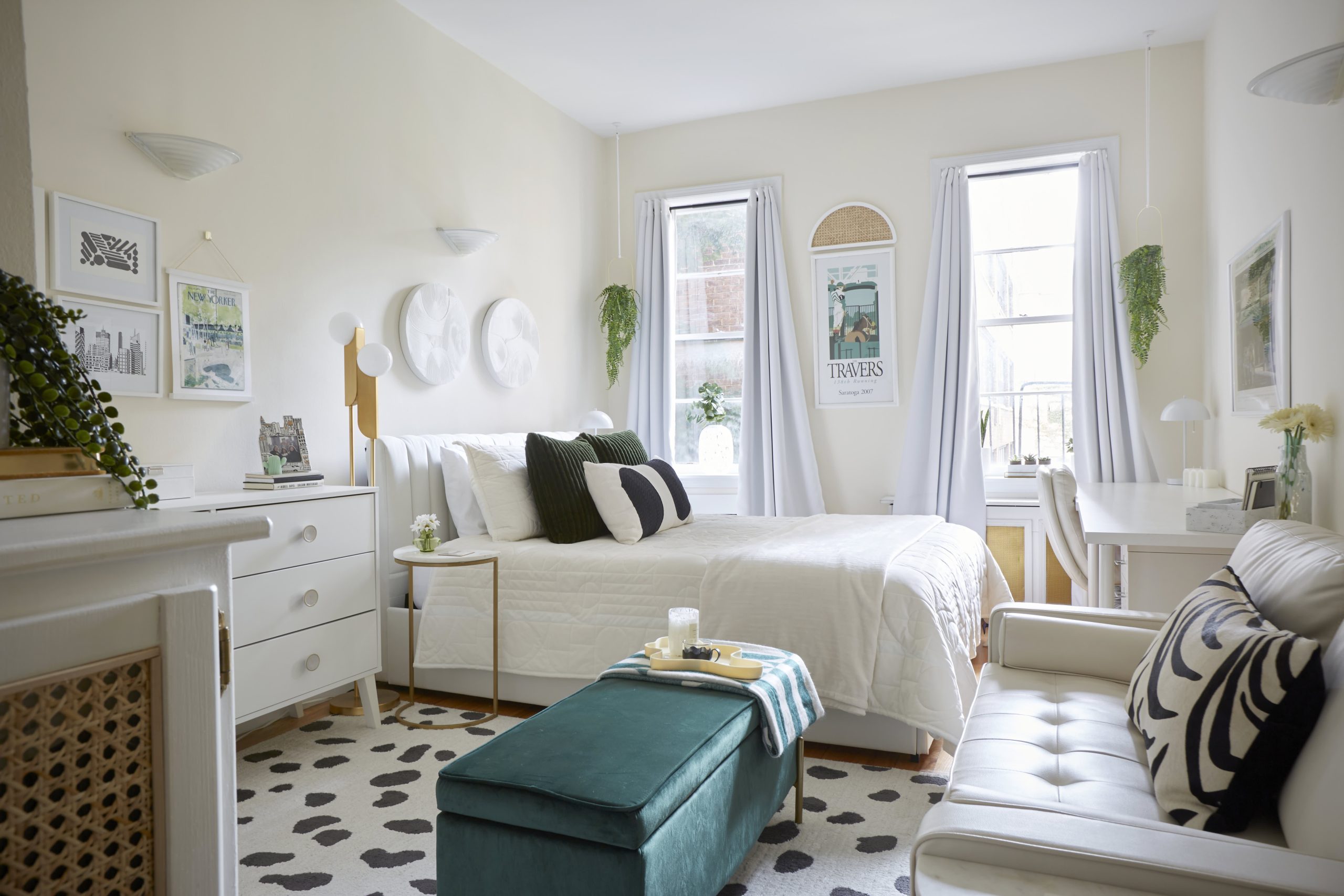
In a small, mostly white room, every accent color carries extra weight. Repeat your chosen color in at least three spots with different textures to make it feel deliberate. Here, deep green shows up in the plush velvet ottoman, the glossy leaves of the faux plants, and could easily extend to a small art piece too. That repetition is what makes a color choice read as designed rather than random. For a bolder version of the same idea, see the black-and-white mural in Idea #17.
3. Warm Up a Minimal Space with a Terracotta Duvet
This room’s welcoming feel comes down to a simple ratio: 60 percent minimalist white, 30 percent earthy color, 10 percent natural texture. White walls and sheer curtains create a bright, gallery-like canvas. A bold terracotta duvet delivers the earthy warmth that makes up that crucial 30 percent. The final 10 percent comes from a wicker headboard, a macrame plant hanger, and a snake plant, adding organic texture so the room never feels sterile. Swap the terracotta for olive green or mustard yellow and the same ratio still holds.
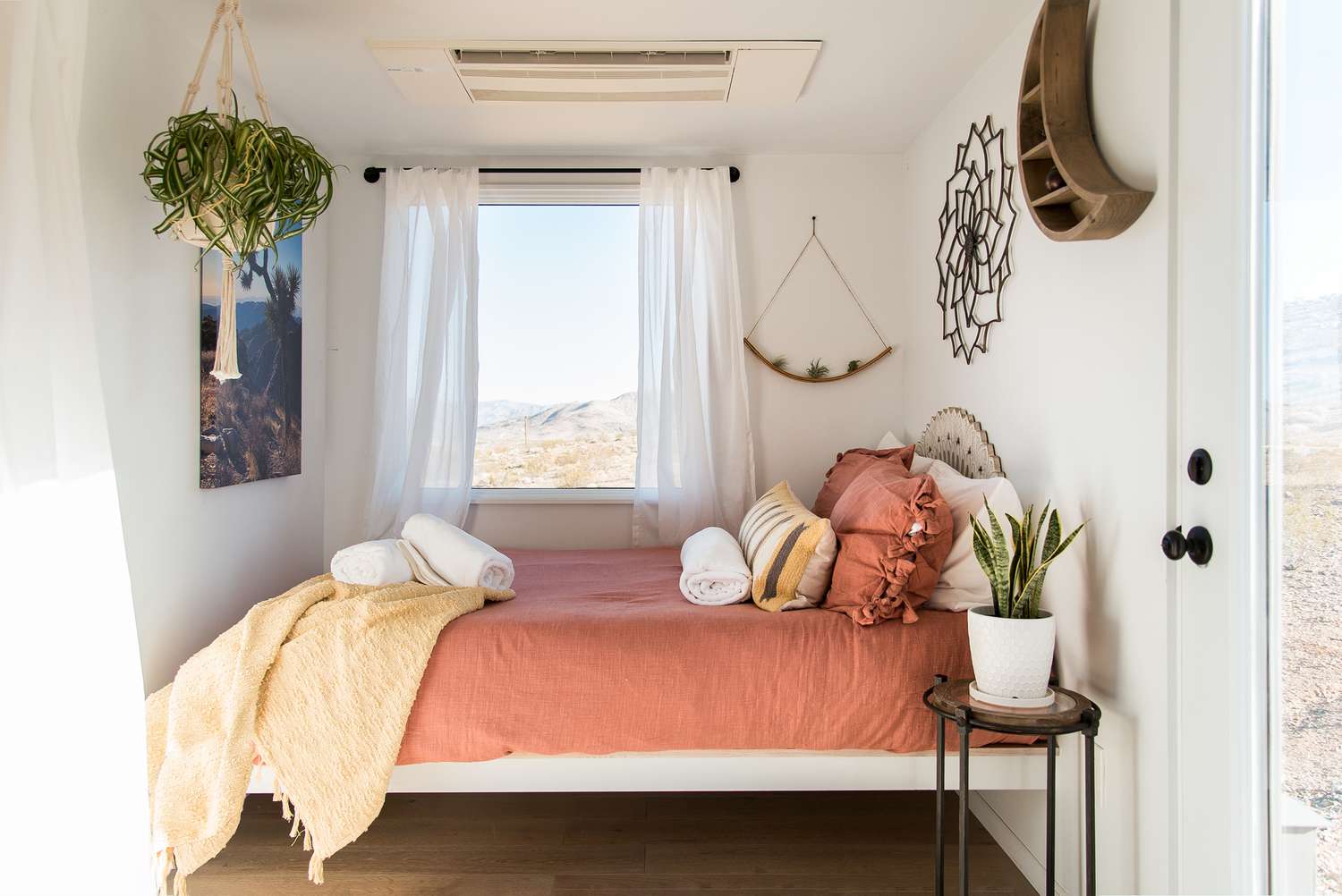
That terracotta duvet is the true heart of this room. Take it away and you are left with a pleasant but forgettable mix of white and wood. That single block of rich, earthy color gives the space its personality and its desert-modern feel, anchoring the whole design around one confident choice. It is proof that a minimalist room only needs one standout element to make a real impact.
4. Craft a Cozy Corner with a Gallery Wall and String Lights
Building a balanced gallery wall does not have to be stressful. This method takes about 90 minutes and gives you a solid layout before you drill a single hole.
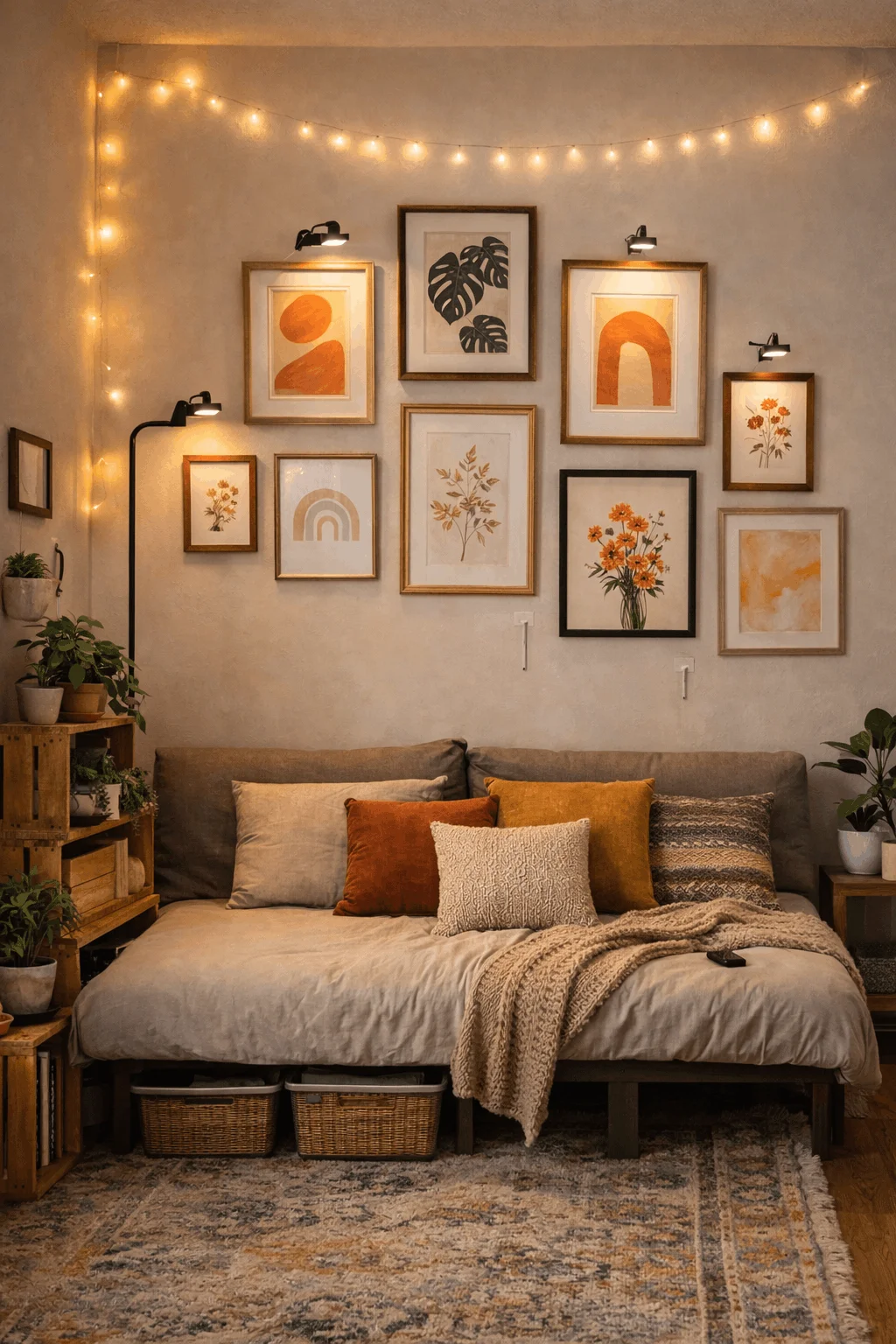
Gallery walls and string lights stay popular because they are the easiest tools for personalizing a space, especially in small rooms or rentals where bigger changes are off the table. The goal is a kind of cozy maximalism, trading stark empty walls for something that feels lived-in, layered, and full of personal history. The warm glow of string lights adds instant golden-hour ambiance, a reliable trick for a welcoming feel on a tight budget.
5. Create a Playful Kid’s Room with a Batman Wall Decal
A themed kid’s room does not need to be expensive or covered in branded merchandise. The centerpiece here is a Batman wall decal, available on Amazon or Etsy for under $30. Pair it with a simple white pull-out bed from IKEA ($250) and a basic white dresser. Red and white plaid bedding adds a pop of color and is easy to find affordably at Target or Walmart. Keeping the main furniture neutral means you can swap the theme cheaply as your child’s interests change. Just peel off the old decal and stick on a new one.
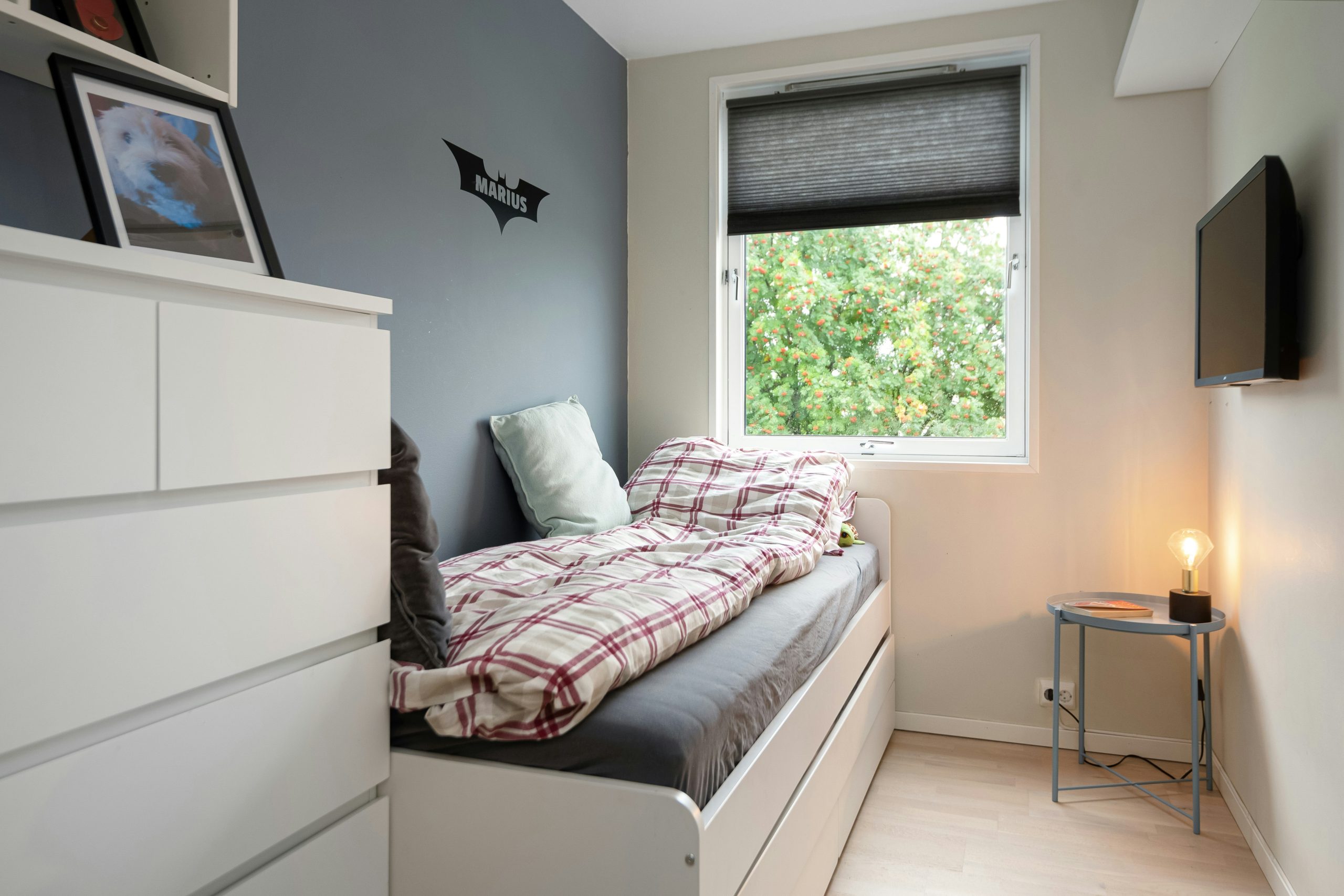
When decorating a kid’s room, paint the accent wall behind the bed. It creates a strong focal point and anchors the main furniture piece. The medium gray wall here makes the white headboard and Batman decal stand out while also clearly defining the sleep zone. Another smart move: mount the TV on the wall. It frees up surface space on the dresser and is safer in a child’s room since it cannot be knocked over. A cord-hiding kit keeps the setup looking tidy.
6. Embrace Bohemian Style with Trailing Plants and Natural Textures
That gorgeous cascade of greenery is a cornerstone of the boho look, but it comes with real upkeep. Plants like pothos and ivy need consistent watering, usually weekly, good indirect light, and occasional pruning so they do not get leggy. Think carefully about placement too. Hanging plants directly over a bed risks water drips or falling leaves. A jute rug adds great texture but is not the easiest to clean since it does not handle liquid spills well and can shed fibers, so plan on regular, gentle vacuuming.
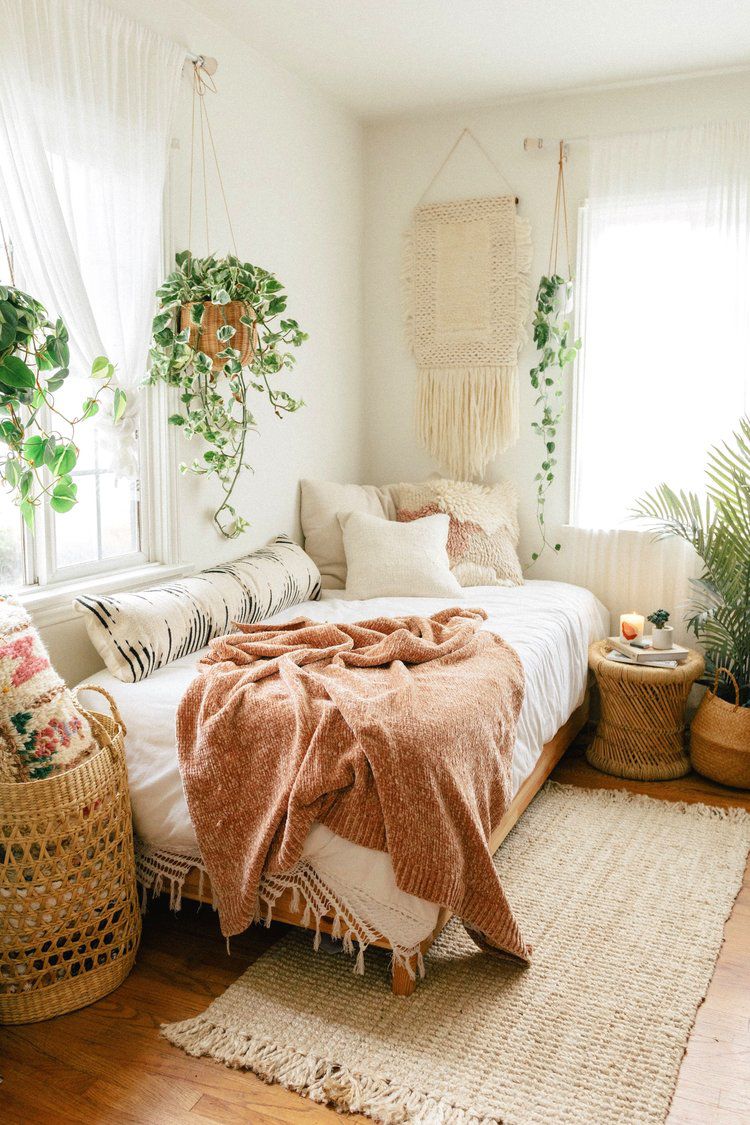
This cozy, natural look is genuinely budget-friendly if you lean on thrifted and natural materials. Check Facebook Marketplace for a simple light wood bed frame, often available for under $100. The macrame wall hanging and plant hangers are classic DIY projects costing under $20 in craft store materials. Hit a thrift store for woven baskets and a side table. The only things you may need to buy new are the bedding and the plants themselves, bringing this whole serene setup in under $500.
7. Display a Personal Collection on Asymmetric Shelving
The multi-level floating shelf unit showcasing a trophy collection is what makes this room stand out. Take it away and you have a pleasant but fairly ordinary blue bedroom. Keep it, and the room tells a story about personality, achievement, and passion. The asymmetry of the shelves adds a modern, dynamic edge that keeps the display from feeling stiff or overly formal, proving storage can double as self-expression instead of just hiding things away. It is a more personal approach than the gallery wall in Idea #4.
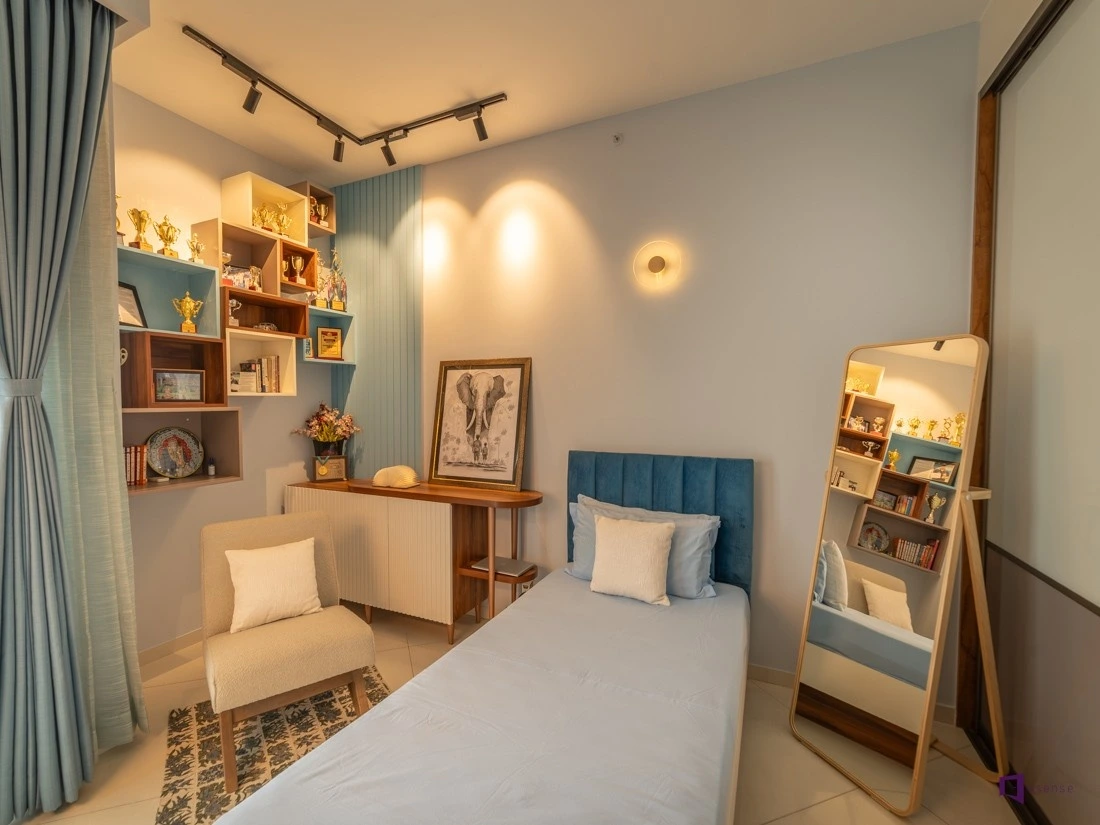
Floating shelves look great, but be realistic about the upkeep. Open shelving attracts dust fast, and a display like this, packed with dozens of individual trophies, needs weekly dusting to stay sharp. Skip this style if you are not up for that kind of maintenance. Installing a unit this size also means locating multiple wall studs to safely support the weight of all those awards, so measure carefully and use a reliable stud finder.
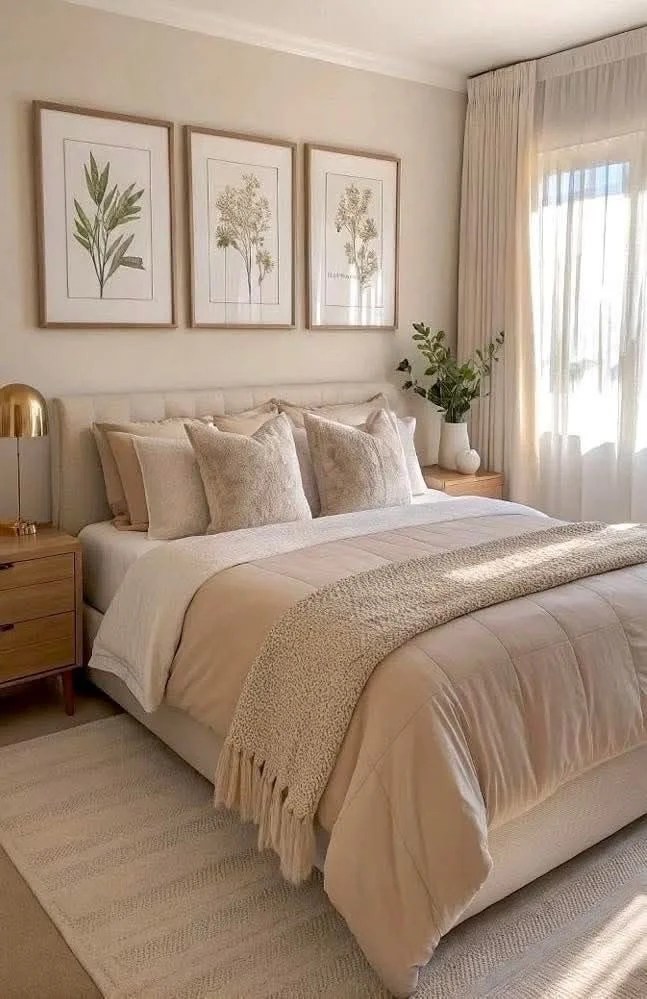
8. Create Calm with a Tufted Headboard and Botanical Art
This bedroom is a masterclass in building a tranquil retreat inside a small footprint. The magic is in its tight color story and layered soft textures. A limited palette of beige, cream, and off-white keeps the room from feeling busy, while the tufted headboard, a shaggy throw, and sheer curtains all layer in softness that absorbs sound and makes the space feel genuinely cozy. Pops of green from botanical prints add life without introducing a jarring color.
9. Layer Soft Textures with Pale Green Striped Wallpaper
This room runs on layered sophistication: 50 percent soft pattern, 30 percent solid texture, 20 percent metallic shine. Pale green striped wallpaper and subtly patterned curtains carry most of the visual interest, forming a gentle, dynamic backdrop. Solid gray nightstands and a soft tufted headboard add contrast. A brass and crystal chandelier plus gold ring pulls on the furniture supply that final 20 percent of glamour and warmth, elevating the whole scheme.
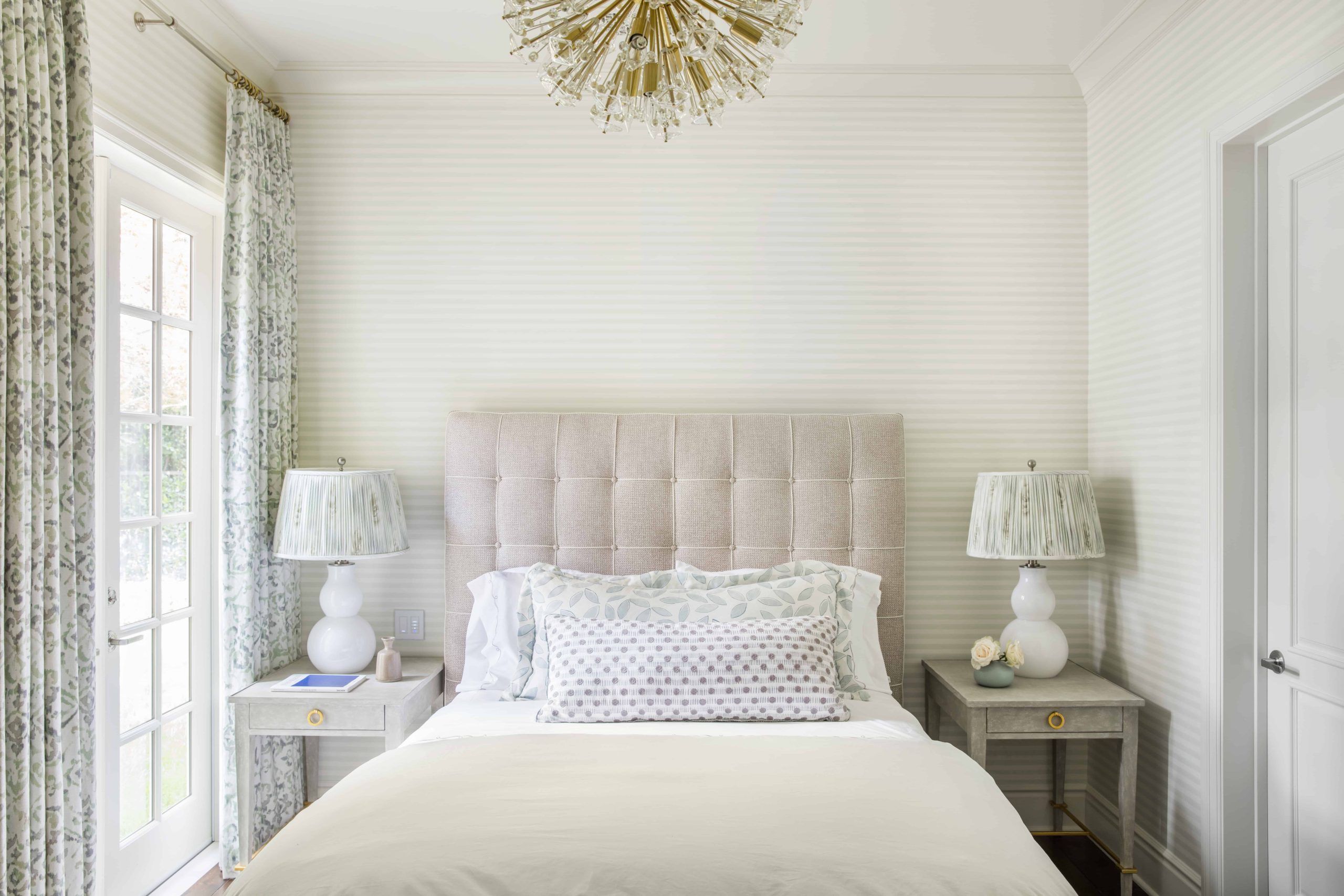
This approach suits a small to medium bedroom best, ideally 120 to 180 square feet. Horizontal stripes on the wallpaper can actually make a narrow room feel wider, though in a room with ceilings under 8 feet, horizontal stripes can feel a bit heavy. In that case, a vertical stripe or smaller-scale pattern draws the eye upward instead. The key throughout is keeping the patterns, both the stripes and the curtain motif, delicate and low-contrast so they never overwhelm the space.
10. Mix Rustic Wicker and Painted Furniture in a Blue Bedroom
This room feels serene because it balances warm and cool tones as well as rustic and refined finishes. Light gray-blue walls bring a cool, calming base, warmed up by natural wood nightstands and woven wicker baskets. Distressed paint on the lamps plays against the clean lines of a white headboard, creating a similar push-pull between casual and classic. That layering of opposites gives the room a collected, effortlessly chic feel.
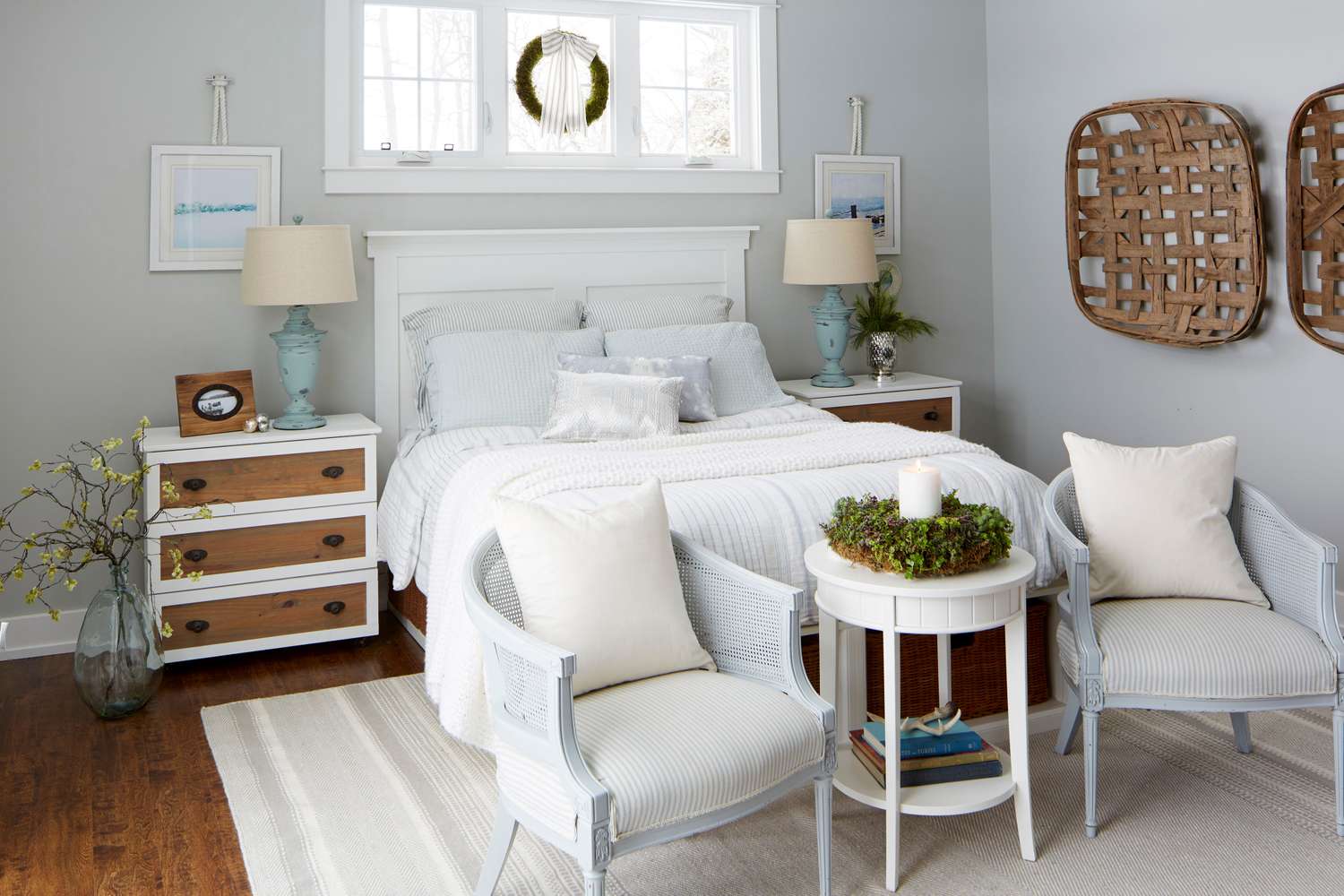
This coastal-grandma-adjacent style has real staying power for a reason. It is the design equivalent of a perfect linen shirt: timeless, comfortable, and always looking put-together. It pushes back against the overly sleek minimalism of past years in favor of comfort and nostalgia. Natural materials like wicker and wood, paired with soft, sun-faded colors, create a space that feels like a permanent vacation. It is less about any one location and more about capturing a relaxed state of mind.
11. Build a Charming Bed Nook with Green Paneling and Floral Wallpaper
Adding vertical paneling, or beadboard, is a great way to bring in character over a weekend for under $200.
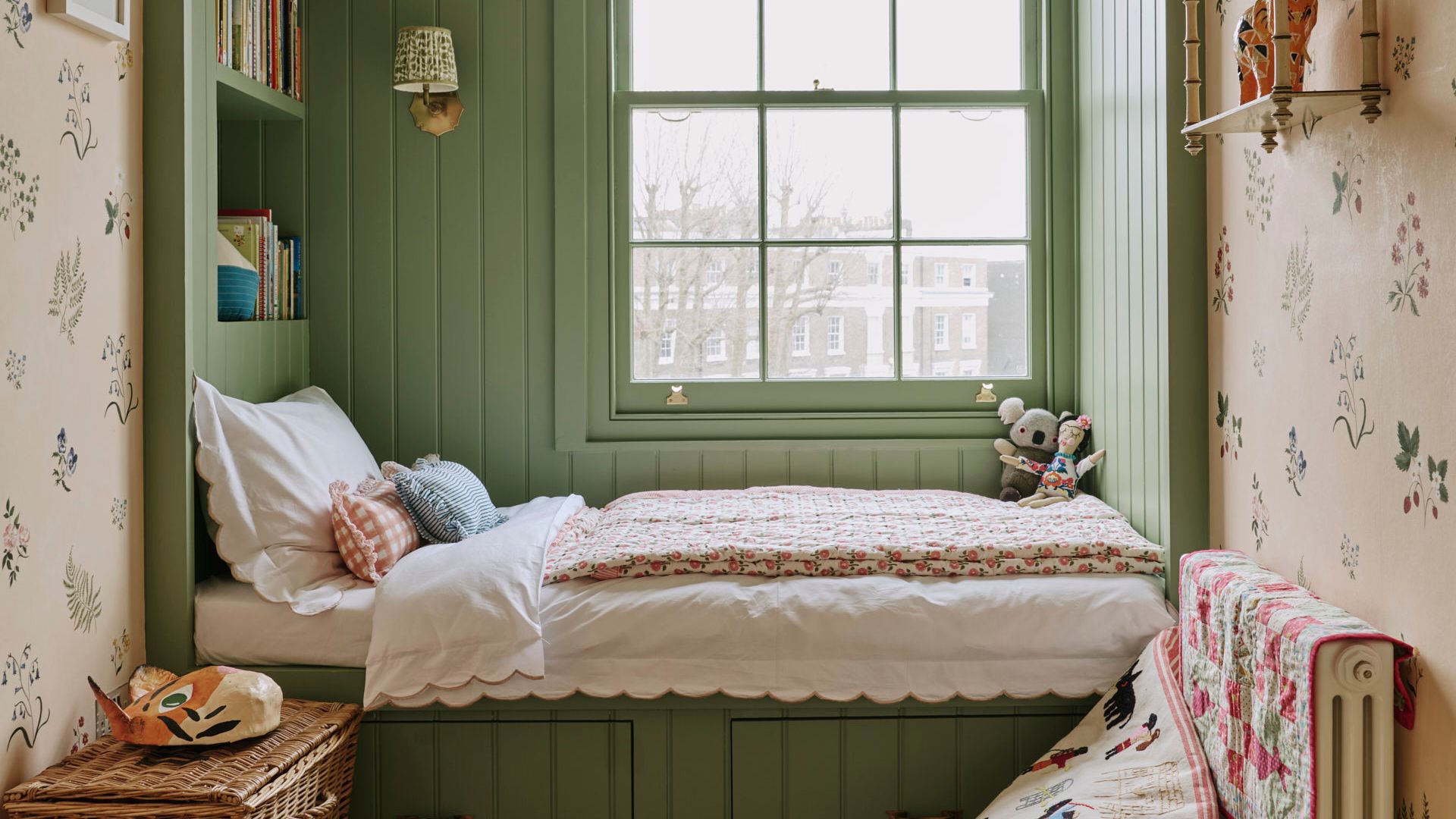
This look sits at the center of the grand-millennial, or cottagecore, trend that has taken over Pinterest. It is a warm-hearted pushback against years of stark gray-and-white minimalism. Combining traditional elements like floral wallpaper and wood paneling with a fresh, playful palette of light green and pink makes the space feel nostalgic and modern at once, personal and charming, almost like a room out of a storybook. Compare its cozy, enclosed feel to the more open nook in Idea #12.
12. Design a Cozy Bed Nook with a Built-In Platform
The built-in bed platform is what defines this space. It turns a plain wall into a cozy, intentional nook that feels like its own retreat, more architectural than simply pushing a bed against the wall. Painting the platform the same warm beige as the walls is the crucial detail, making the whole structure feel like a seamless part of the room instead of a bulky add-on. This deliberate, built-in approach gives a small room a custom, high-end feel. For a different spin on a bed nook, see Idea #11.
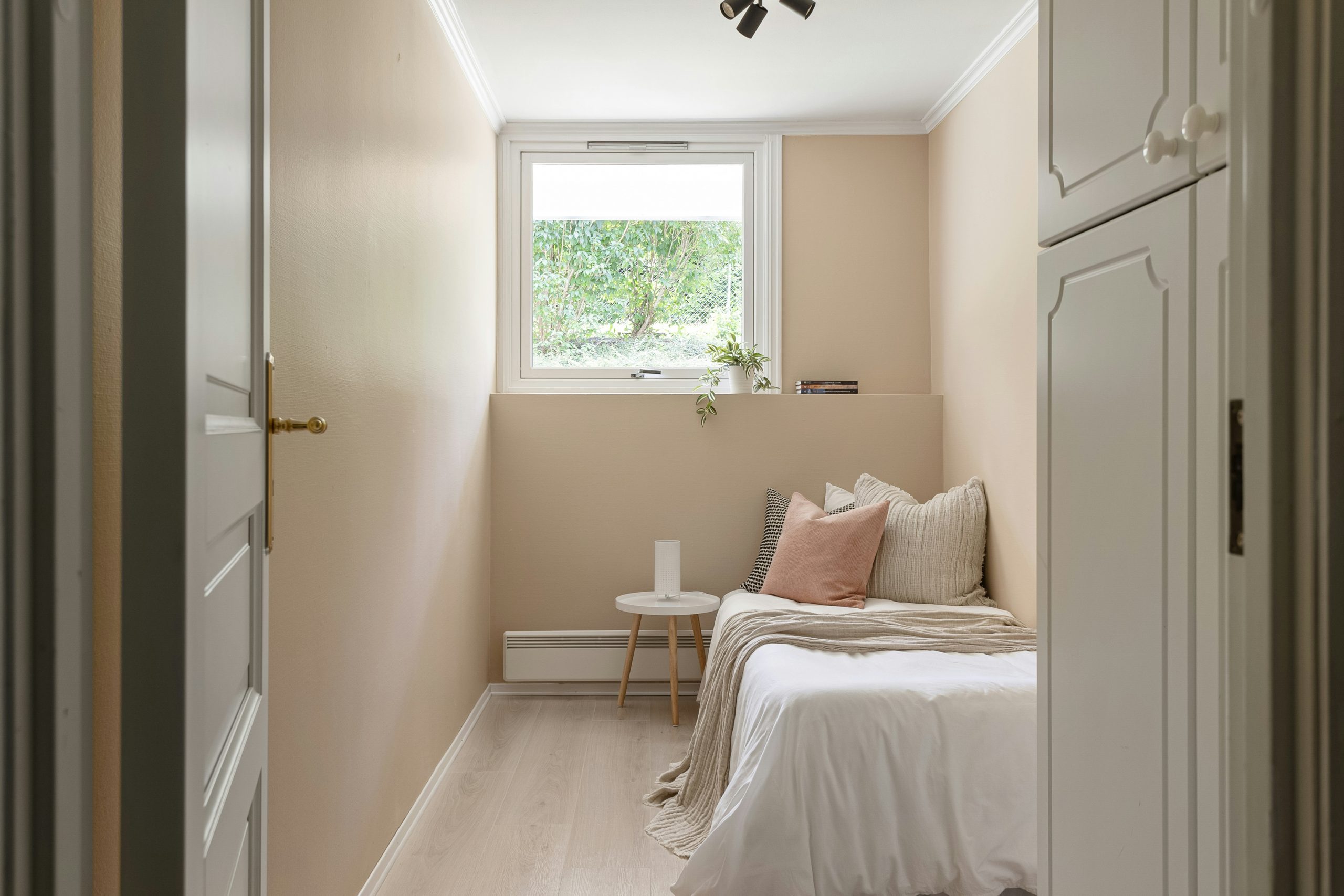
The visual formula for this cozy corner runs 80 percent warm neutrals, 15 percent clean white, 5 percent sharp black. Warm beige on the walls and platform creates an enveloping, cocoon-like feel. Crisp white on the window frame, trim, and cabinet door adds clean contrast so the beige never feels muddy. A small dose of black from the track lighting works like eyeliner for the room, adding definition and a touch of modern edge without tipping the palette too soft.
13. Achieve Minimalist Calm with a Wooden Stool Nightstand
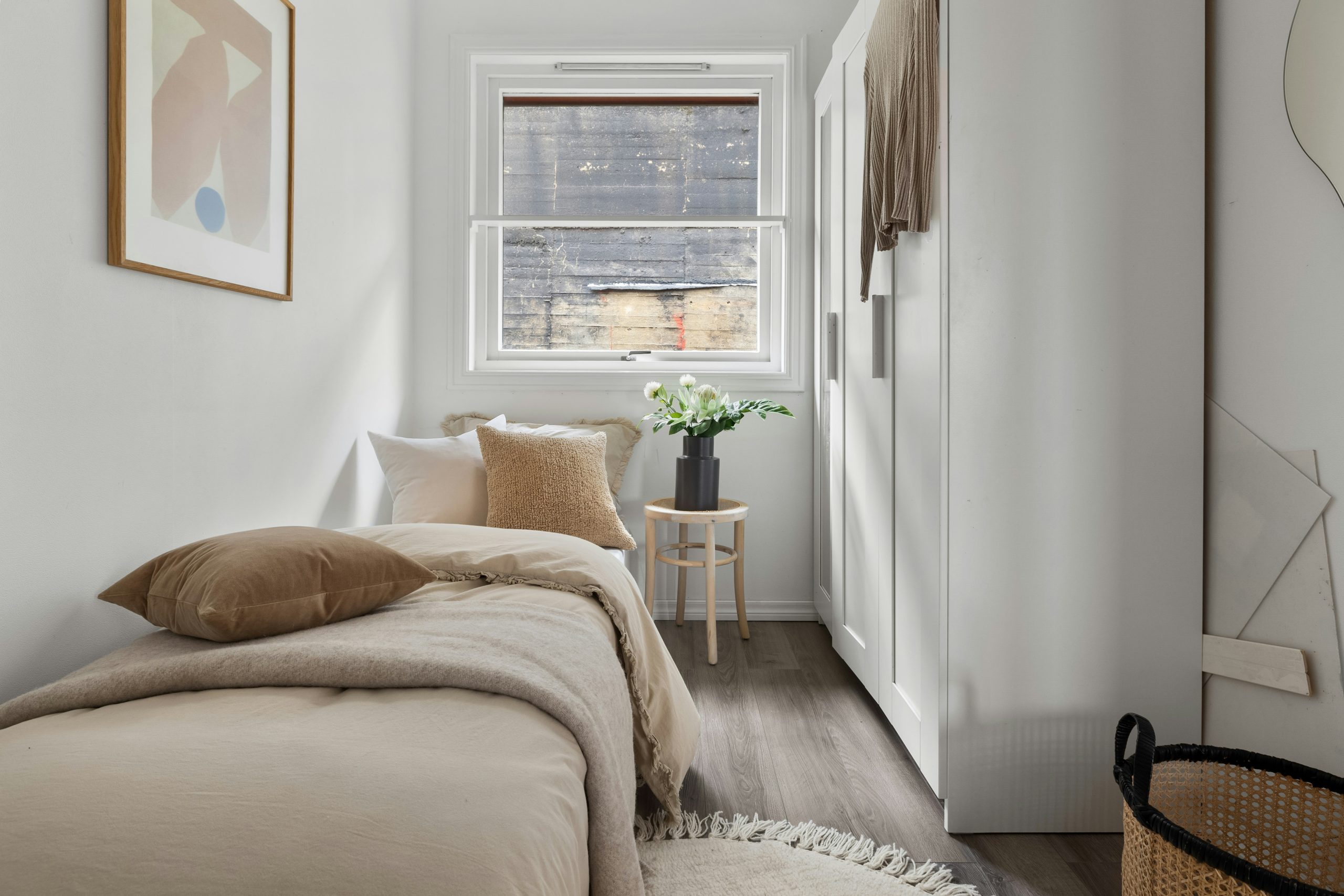
This bedroom’s serene, minimalist feel comes from ruthless editing. Every object here earns its place, either functionally or aesthetically. The palette sticks strictly to white, beige, and warm wood for a restful visual field, and the furniture leans on simple, clean lines, an unadorned wardrobe, frameless art. Using a small wooden stool as a nightstand is the key move, giving you a surface for essentials without the visual bulk of a traditional bedside table, keeping the floor feeling open.
14. Embrace Minimalism with White Panel Walls and a Rocking Chair
This room reaches a serene, minimalist feel through texture and form rather than color. Vertical wood paneling on the walls adds subtle texture and a sense of height, keeping the all-white space from reading as flat or sterile. A mix of shapes, the gentle curve of the rocking chair, a round faux fur stool, a rectangular bed, and linear shelving, creates a dynamic, interesting composition. A distressed black and white rug anchors the light-colored furniture.
White walls, light wood floors, and minimalist furniture look beautifully clean, but they also turn every speck of dust, dirt, or hair into the star of the show. A distressed pattern rug like this one is a smart choice since it helps camouflage minor debris, though the white faux fur stool and dark bedding will need regular cleaning and lint-rolling to stay looking sharp. This aesthetic is high style but also high visibility for everyday mess, so it suits a genuinely tidy household best.
15. Create a Cozy Nook with a Deep Blue and Wood Slat Wall
When painting a small room a dark color like this deep blue, do not shy away from painting the ceiling the same shade. It is a common myth that this shrinks a room. In reality, it blurs the line between walls and ceiling, creating a cozy, enveloping, almost infinite feeling, similar to a night sky. The effect is especially strong in a small bedroom, where it can make the space feel like a protective cocoon. Contrast from the light wood slat wall adds dimension so the room never feels flat.
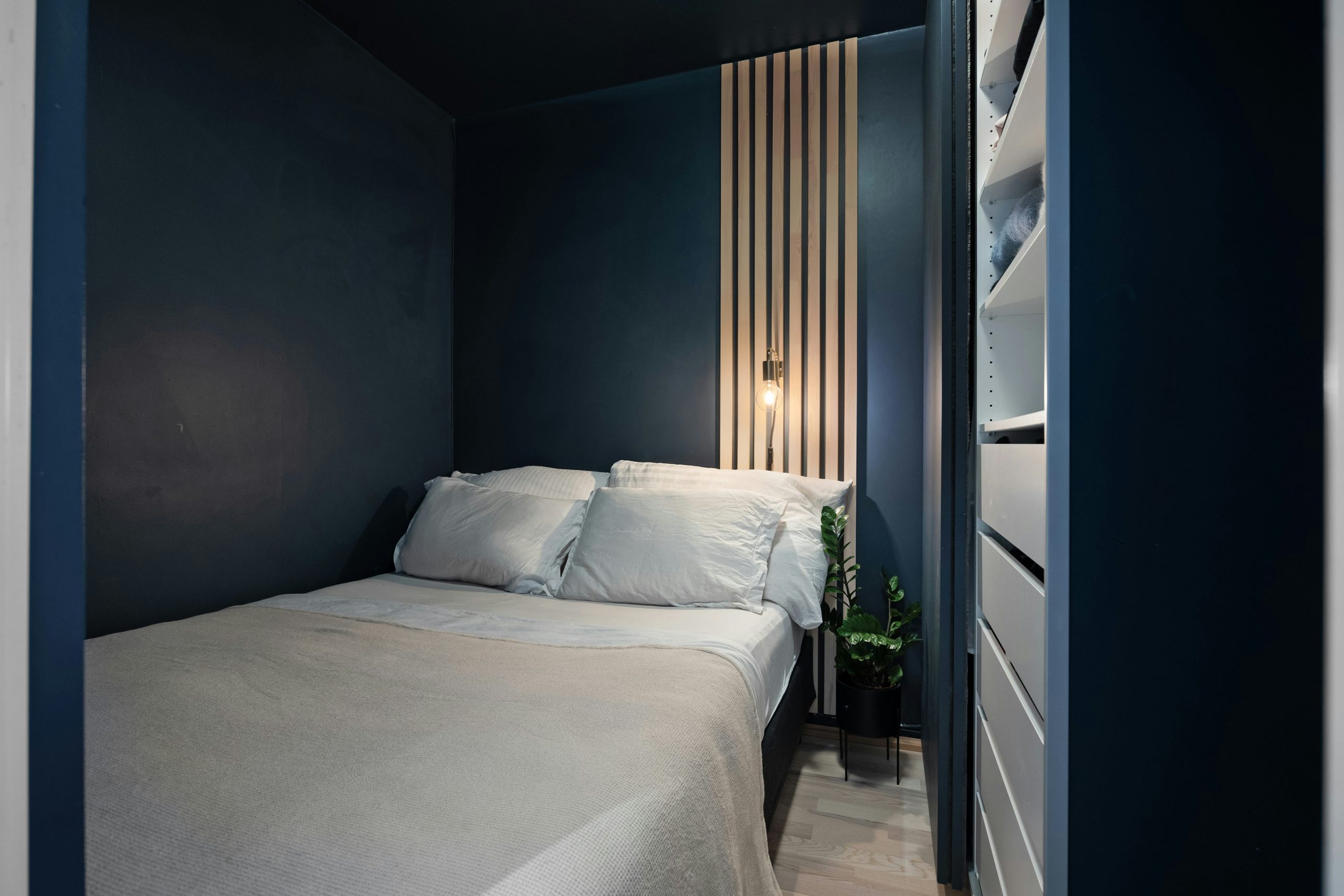
The wood slat wall is the real star of this look, and it can be a DIY project that saves significant money. Everything else here is just paint and smart storage.
16. Design a Cozy Twin Attic Bedroom with Wood Paneling
You can get this charming, rustic attic feel without paying for custom wood paneling. Look for a high-quality, textured peel-and-stick wallpaper in a wood-plank design. Covering the walls and ceiling costs a few hundred dollars and stays fully reversible for renters. For the nautical sconces, check Etsy for vintage finds or reproduction styles, usually cheaper than buying new fixtures. Simple red throw blankets and a navy rug from Target or IKEA finish the look on a budget.
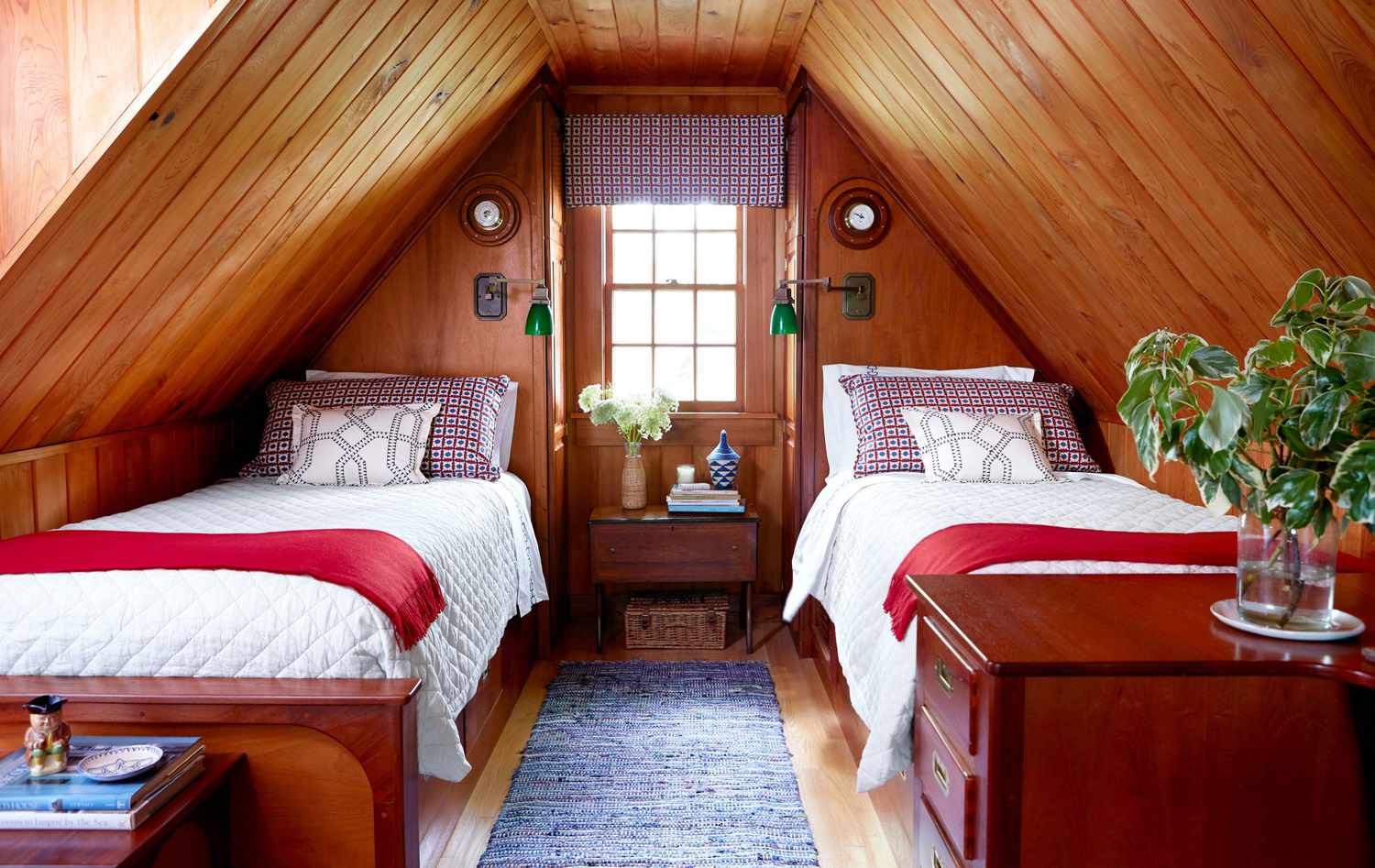
In a room with strong architectural features like sloped, wood-paneled walls, keep the furniture simple and low. The twin beds here use unobtrusive frames that do not compete with the walls. Choosing sconces over table lamps is also a smart space-saving move, freeing up the entire surface of a small central nightstand. When your walls are the main event, let everything else play a supporting role instead of fighting a strong background with busy furniture.
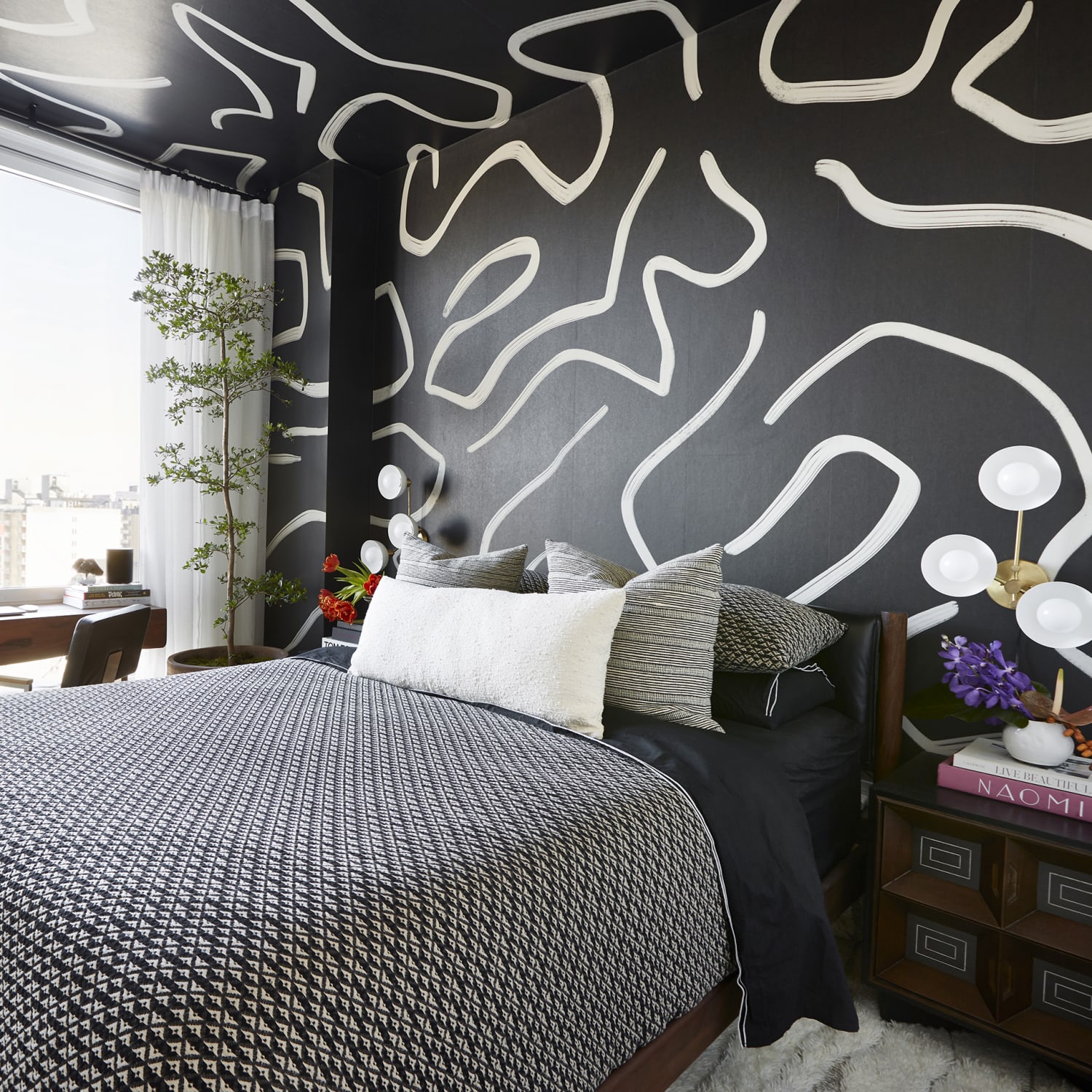
17. Go Bold with a Black and White Abstract Mural
The formula behind this dramatic look is surprisingly simple: 70 percent high-contrast pattern, 20 percent warm neutrals, 10 percent metallic accents. A black and white abstract mural covering the wall and ceiling is the clear star. The dark wood nightstand and a small green plant provide an earthy, grounding element for that 20 percent, while brass on the wall sconce adds a touch of warmth and light for the final 10 percent. Swap the abstract pattern for a dense floral print and the same formula still works.
18. Carve Out a Simple Work Nook with Earthy Accents
This calm, personal space follows a balanced recipe: 70 percent soothing neutral base, 20 percent natural elements, 10 percent curated color. Light greige walls and white bedding create most of the room’s visual quiet. Natural wood tones on the desk and chair legs, along with a large monstera plant, bring in that essential 20 percent of organic life. Dusty rose and mustard yellow pillows, plus the art, add small, controlled pops of color that give the room its personality.
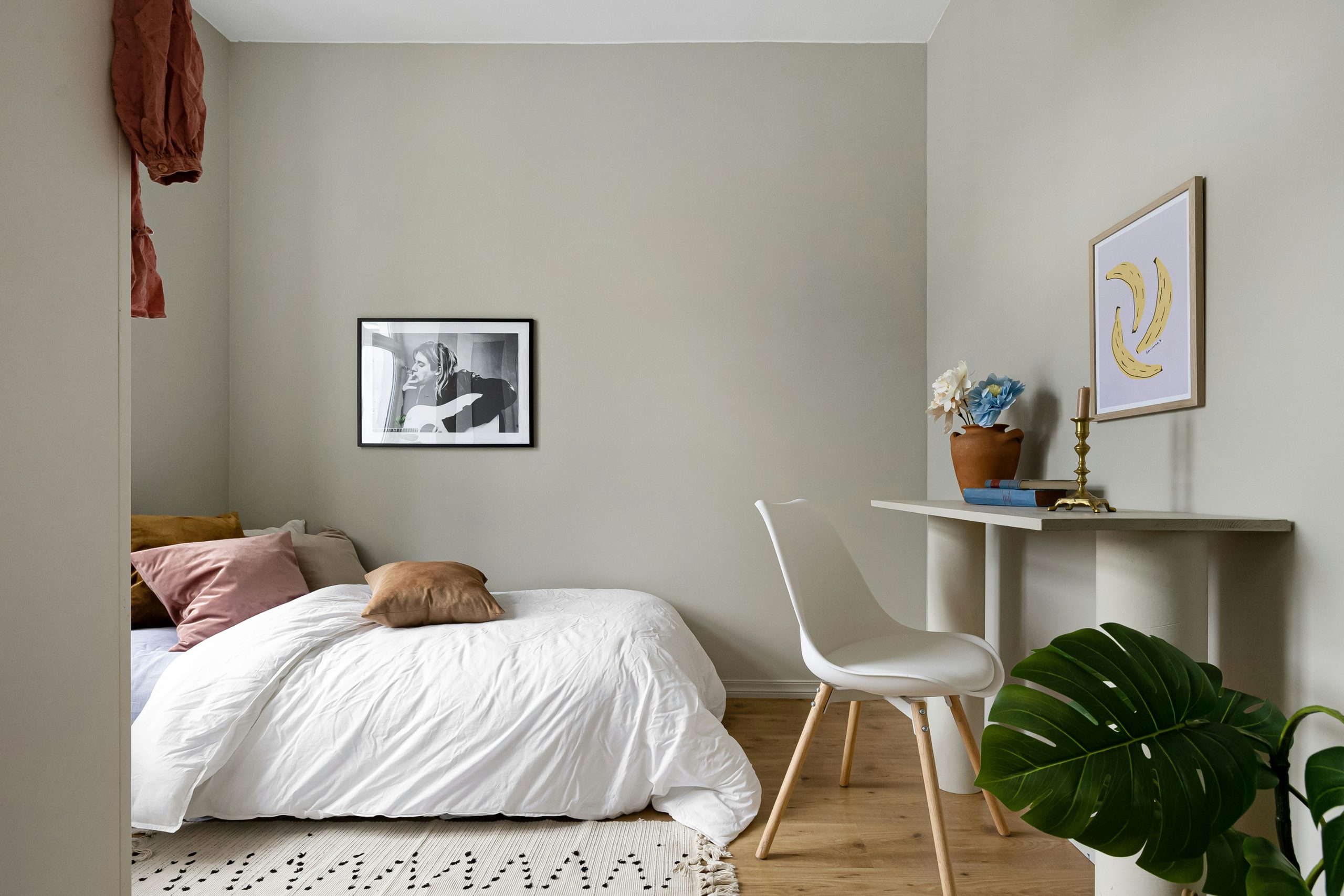
Before installing a narrow wall-mounted desk or shelf, run a quick ergonomic check. Sit in the chair you plan to use and go through the motions of working. Is the height comfortable for your arms and wrists? Is there enough legroom? Will your monitor or laptop sit at a comfortable eye level? A setup that photographs beautifully can still be a literal pain in the neck if it is not sized to your body. Confirm the wall can support a mounted shelf too, especially if you plan to lean on it while working.
19. Maximize Function with Floating Shelves and a Wall-Mounted Desk
With a wall-mounted desk and shelving, the trick to feeling integrated rather than cluttered is a consistent visual line. Notice how the top shelf sits at the same height as the top of the wardrobe? That creates an intentional, clean line that makes separate pieces read as one cohesive unit. Resist staggering every shelf. At least one strong horizontal axis grounds the whole composition and makes a small space feel calmer and more orderly.
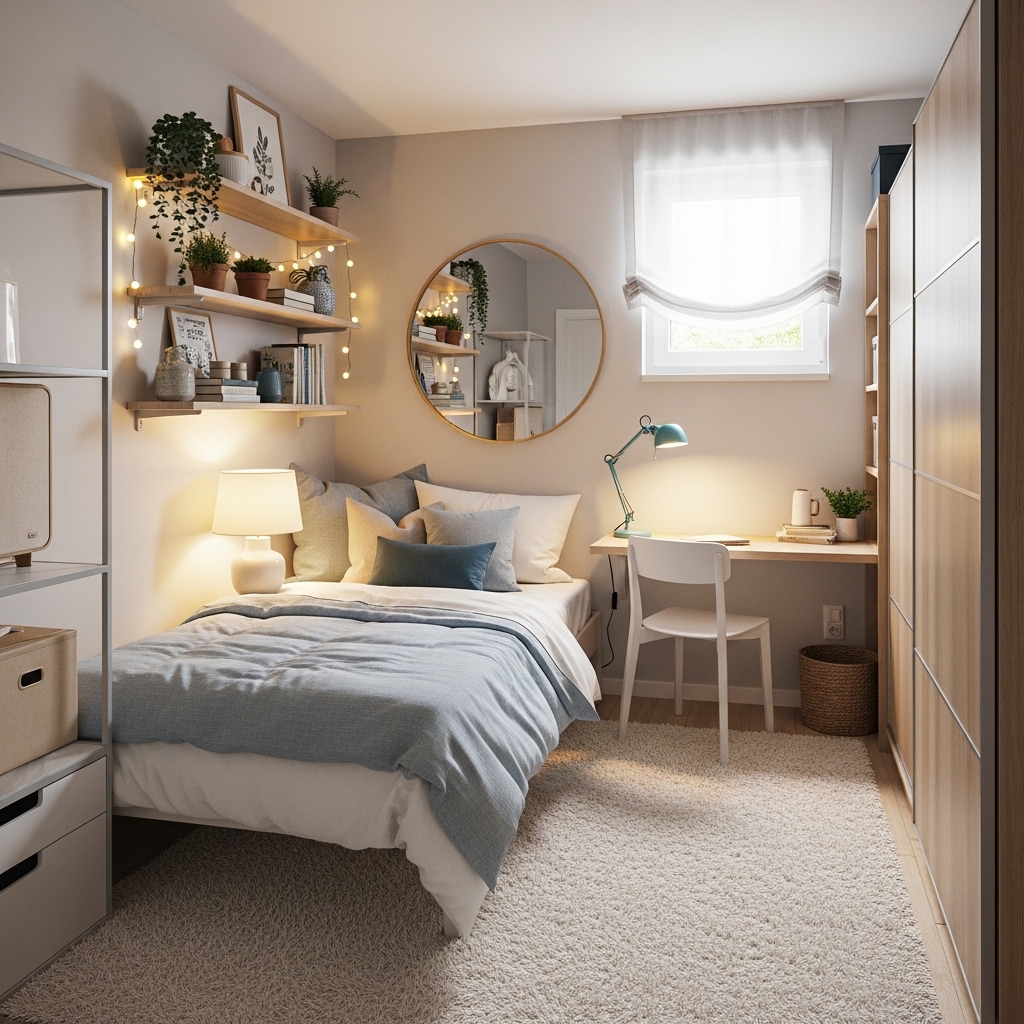
This setup is a lifesaver for truly tiny rooms, working well in spaces as small as 80 to 100 square feet. Lifting the desk and shelving off the floor keeps the visual floor space unbroken, the single biggest trick for making a room feel larger. The round mirror is a smart choice too, its curves softening the stark rectangular lines of the desk, shelves, and wardrobe so the room does not feel too boxy. The whole idea rests on using vertical space to free up the floor.
20. Design a Scandinavian Workspace with a Wall-Mounted Desk
This integrated bed-and-desk layout suits a long, narrow room well, a common challenge in apartments and guest rooms. It works best on a wall at least 10 to 12 feet long, enough for a full or queen bed plus a functional desk space 36 to 48 inches wide. The key is minimal furniture depth. The wall-mounted desk has no legs to trip over, and the platform bed stays low-profile. Sheer curtains extended well beyond the window frame also trick the eye into reading the wall as wider than it is.
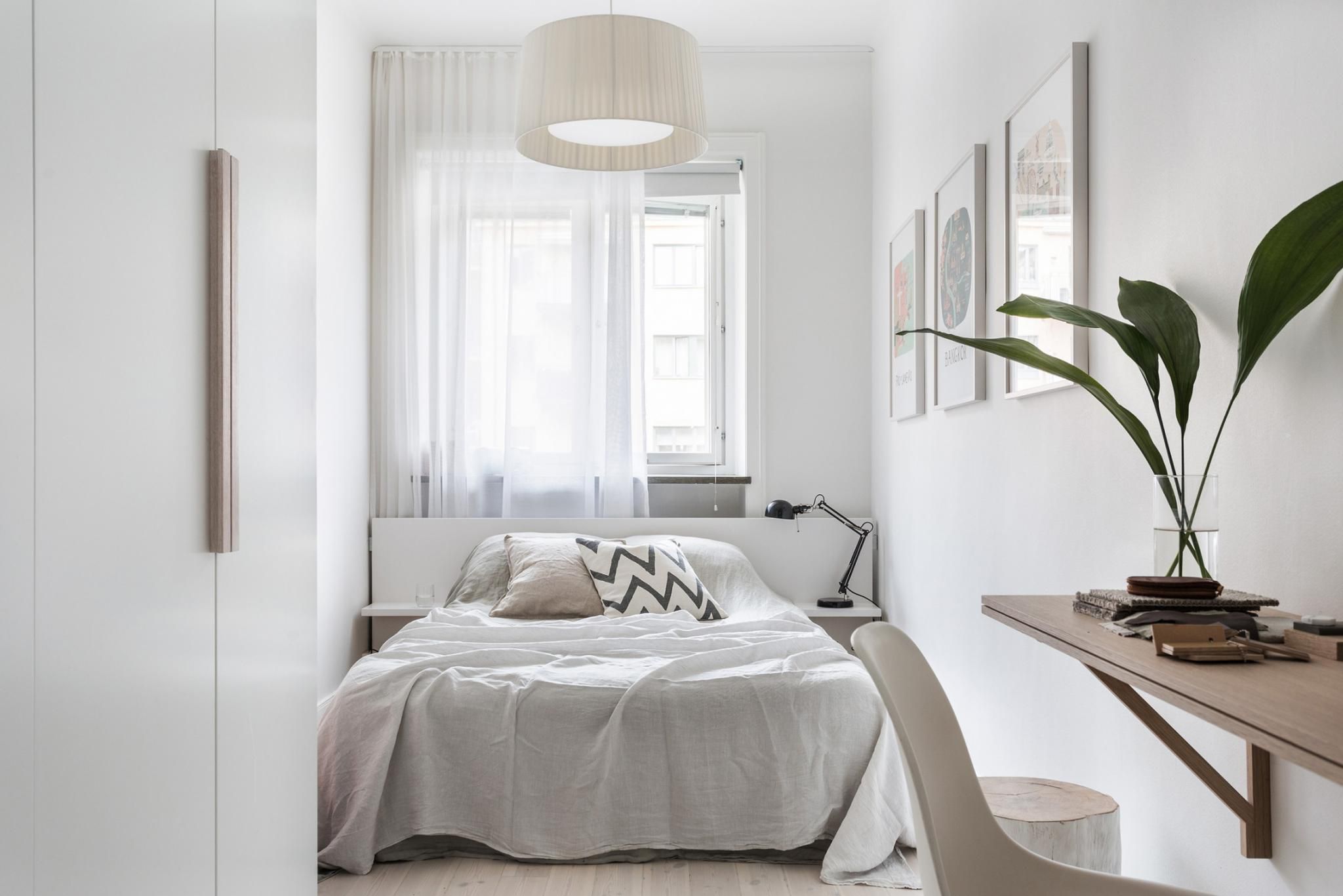
A light, airy Scandinavian look is beautiful but takes real discipline to maintain. A white and light-wood palette leaves nowhere for clutter to hide, so keeping this serene feel means committing to daily tidying of the desk and making the bed. Those sheer white curtains look dreamy but show dust and need laundering more often than heavier, darker drapes, roughly every 3 to 4 months. It is as much a lifestyle choice as a design one.
21. Integrate a Desk into a Modern Studio Living Area
This multi-functional space works because it defines zones cleverly without adding walls. A large paper lantern pendant hangs directly above the desk, visually marking it as the work zone. The sofa and coffee table sit grouped on a rug, forming a distinct lounge zone. Consistent materials, like dark wood in the shelving unit and a circular motif echoed in the art and coffee table, tie the different areas together into one cohesive whole. This is a far more integrated approach than the separated dining nook in Idea #22.
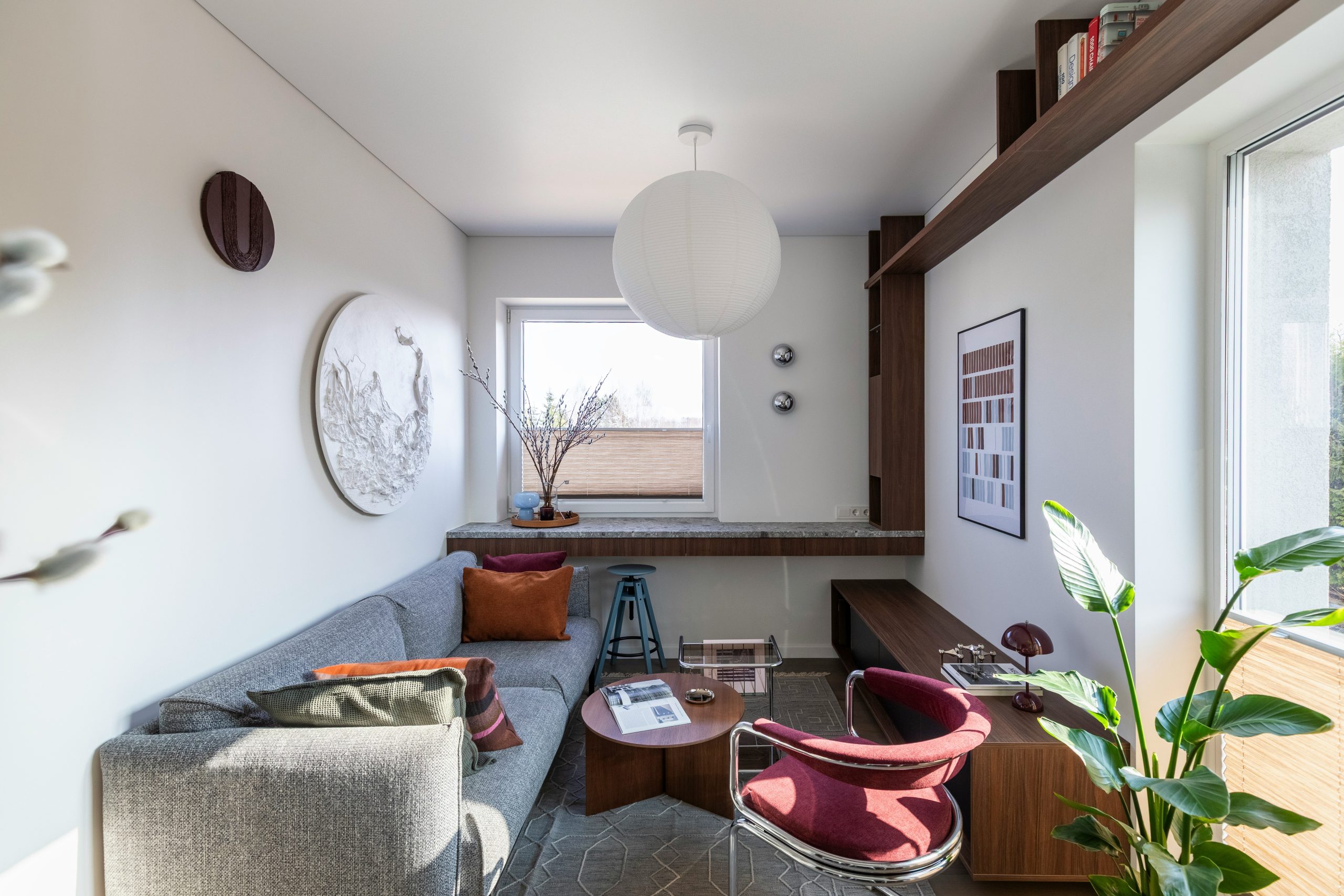
Combining your living and working space is the reality for many people, but be honest about your work style first. A desk in the main living area keeps your work always visible. If you struggle to switch off, seeing your laptop and papers sitting out can add low-grade stress. This setup works best if you can keep a tidy desk or your work lives mostly on a laptop. If your work involves lots of papers or equipment, look for a layout with more hidden storage instead.
22. Carve Out a Dining Nook in a Bedroom Bay Window
This idea shines in rooms with an architectural quirk like a bay window. It works best in a bedroom of at least 150 square feet, giving enough clearance around the bed for a separate functional zone. The key is visually lightweight furniture. A pedestal table (28 to 32 inches in diameter) works well since it has no legs to clutter the floor, and Eames-style chairs keep a slim profile. Ceiling height helps too; tall ceilings here keep the multi-functional space from feeling cramped.
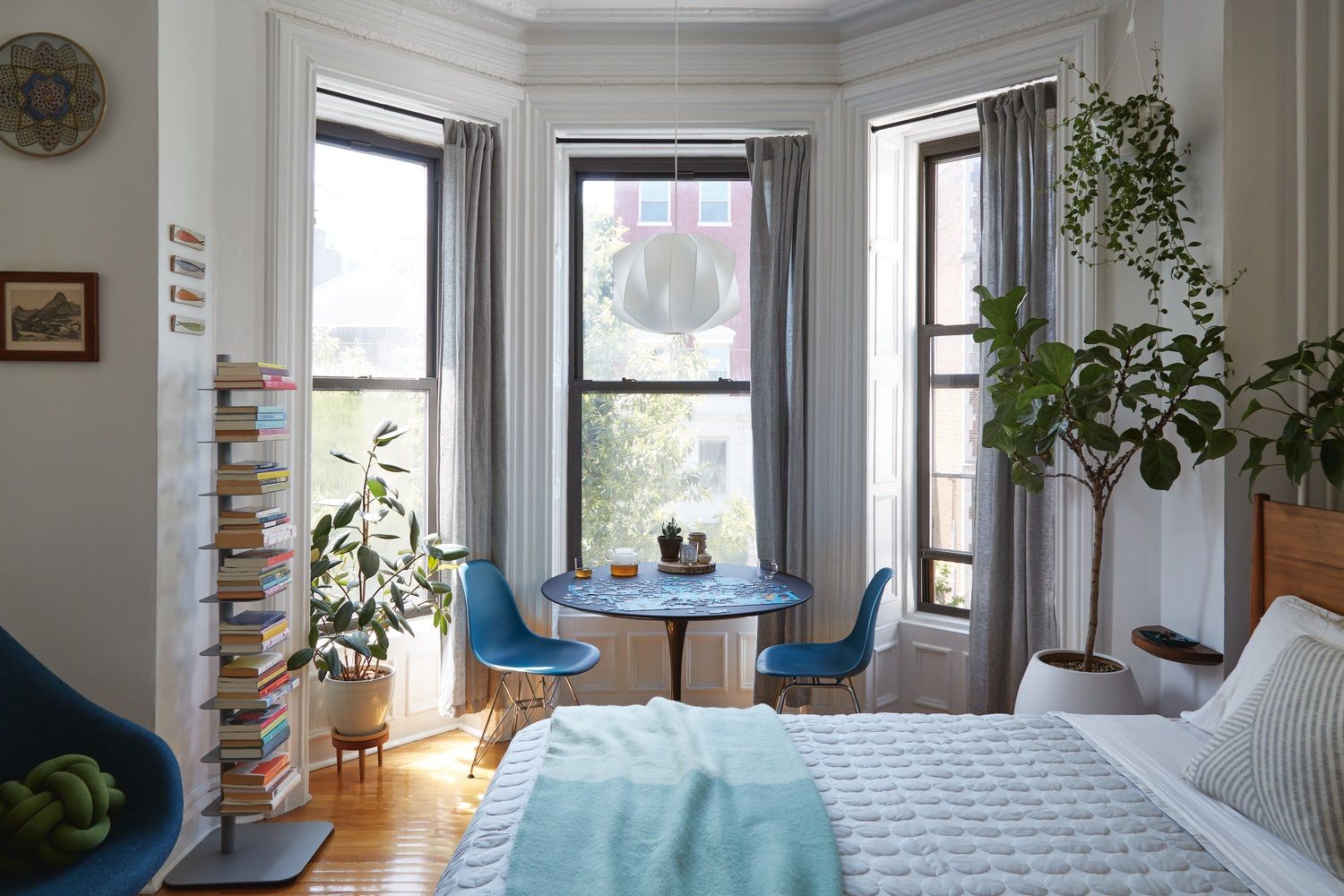
The round pedestal table is what makes this whole concept work. Swap it for a square table or one with four legs and the nook would instantly feel crowded and hard to move through. A single pedestal base keeps the floor clear, creating an illusion of extra space and making it easy to slide chairs in and out. It is a small detail with an outsized impact on the room’s flow, proof that the right silhouette matters enormously in a tight space.
23. Expand a Narrow Room with a Mirrored Closet and Integrated Desk
The mirrored sliding closet door is easily the most impactful element in this room. In a narrow space, a floor-to-ceiling mirror doubles the perceived width, reflecting both light and the view from the window. It is not just a door, it is an active tool for reshaping how the space feels. Swapping a standard door for a mirrored one is a classic trick for a reason: it works every time, and the visual expansion beats simply painting the walls white.
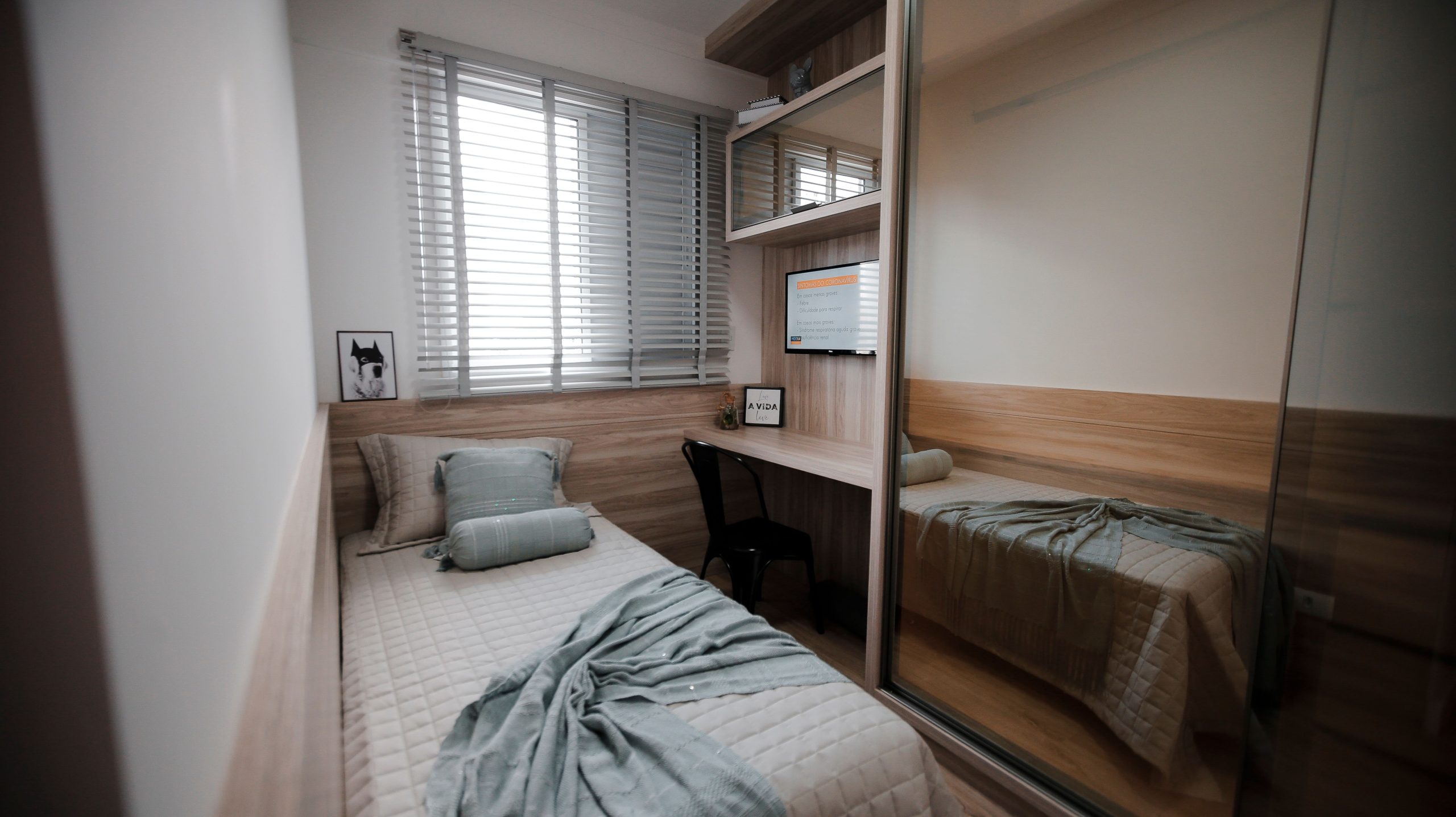
This idea is tailor-made for narrow, bowling-alley-style rooms roughly 8 to 9 feet wide. An integrated bed-and-desk unit along one wall maximizes the room’s usable length, and placing the mirrored closet on the opposite wall creates a strong illusion of width. This layout would feel far more cramped in a square room, where long, linear furniture would fight the proportions. It is a solution built specifically for a challenging rectangular footprint, turning a weakness into a strength.
24. Utilize an Integrated Bed and Corner Desk in a Compact Room
An all-in-one bed and desk unit is an excellent space-saver, but it is a real commitment. Unlike freestanding furniture you can move or swap easily, this arrangement is close to a permanent installation. You are locked into this exact layout, so make sure it is one you actually want long-term. It can also make everyday tasks like changing bedding a bit trickier since the bed is tucked into a corner on two sides. It offers maximum function but minimum flexibility.
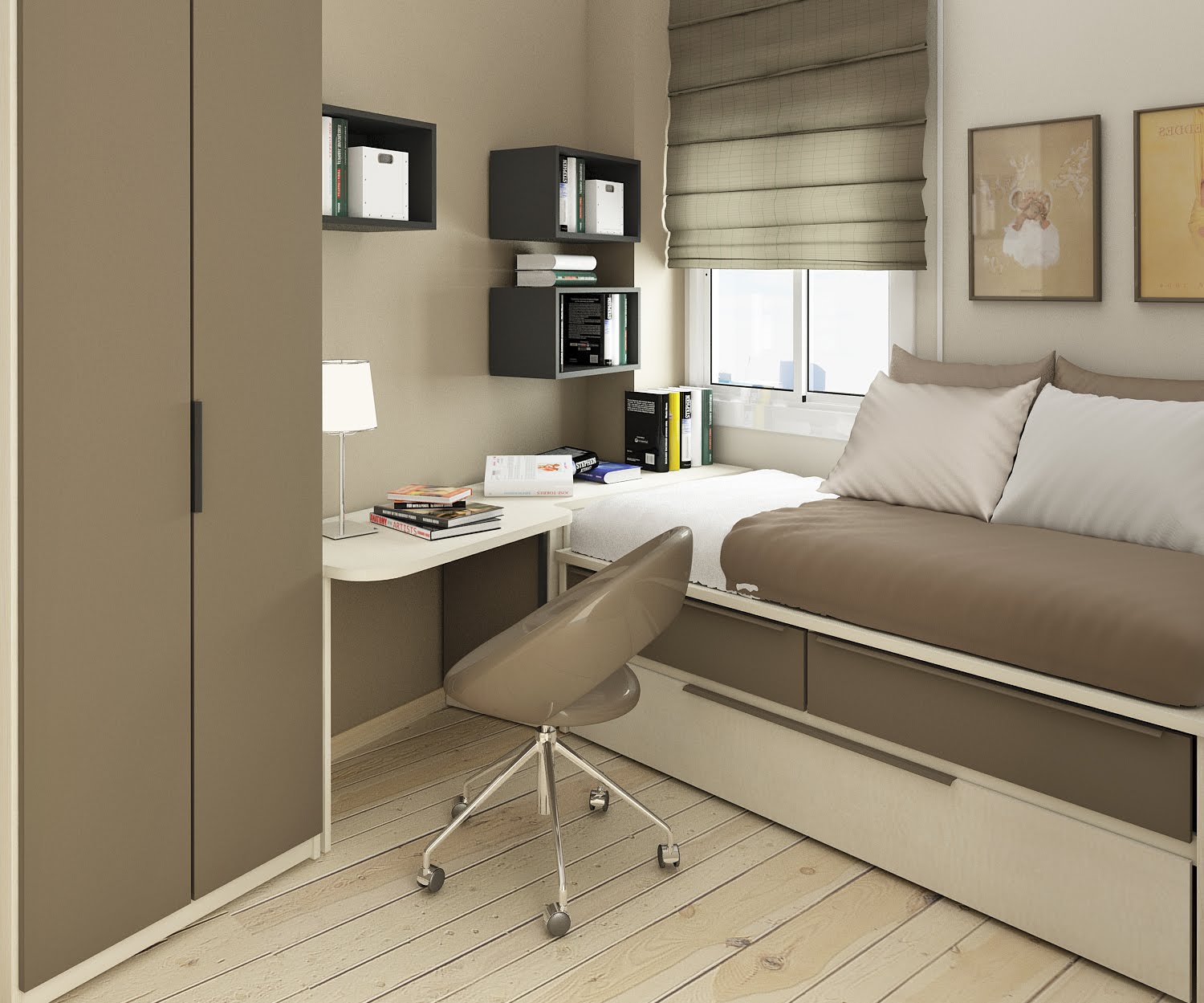
This design works because of its disciplined, monochromatic palette. Walls, wardrobe, and bed frame all sit in the same family of light taupe and beige, keeping the different functional zones, sleeping, storage, working, from visually chopping up the small room. Small pops of dark accent color add just enough depth to avoid feeling flat, while a clear-backed office chair is a genius trick for reducing visual clutter. It is there when you need it and nearly disappears when you do not.
25. Combine a Daybed and Desk for a Coordinated Kid’s Room
Before committing to a fully integrated desk-and-bed system, run through this quick checklist first.
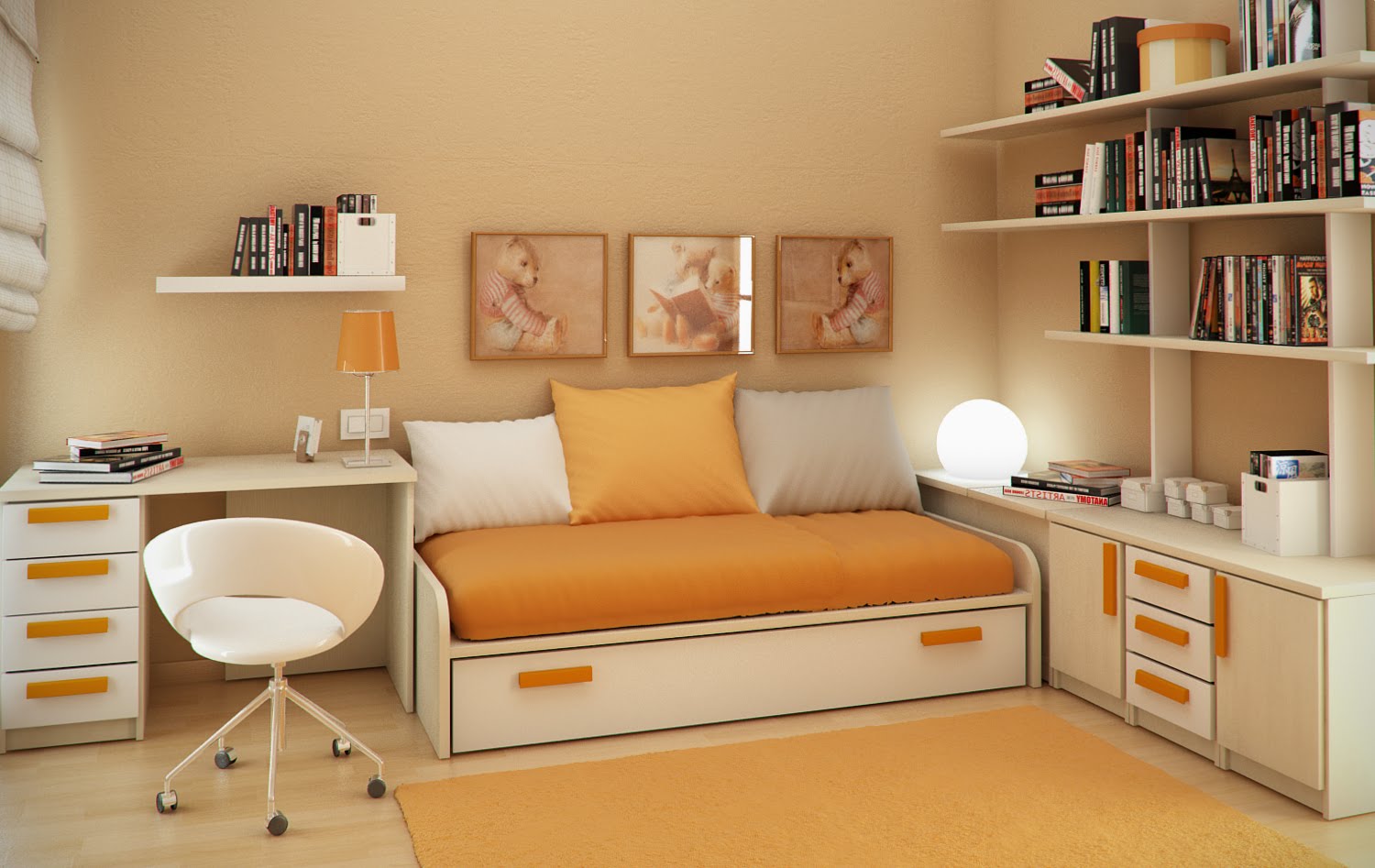
One repeated color, orange, ties this entire room together. It is the unifying thread running through the bold area rug, the drawer pulls, the desk lamp, and the daybed cushions. Remove that repeating accent color and you are left with a collection of functional white furniture. Keep it, and the space feels cohesive, thoughtfully designed, and full of energy. It is proof that you do not need a lot of color to make an impact, just a smart, consistent use of one.
26. Anchor a Neutral Room with a Dark Metal Canopy Bed
To recreate this warm, textural room, focus your budget on a few key pieces. The canopy bed is the biggest investment here, and it is what defines the entire space.
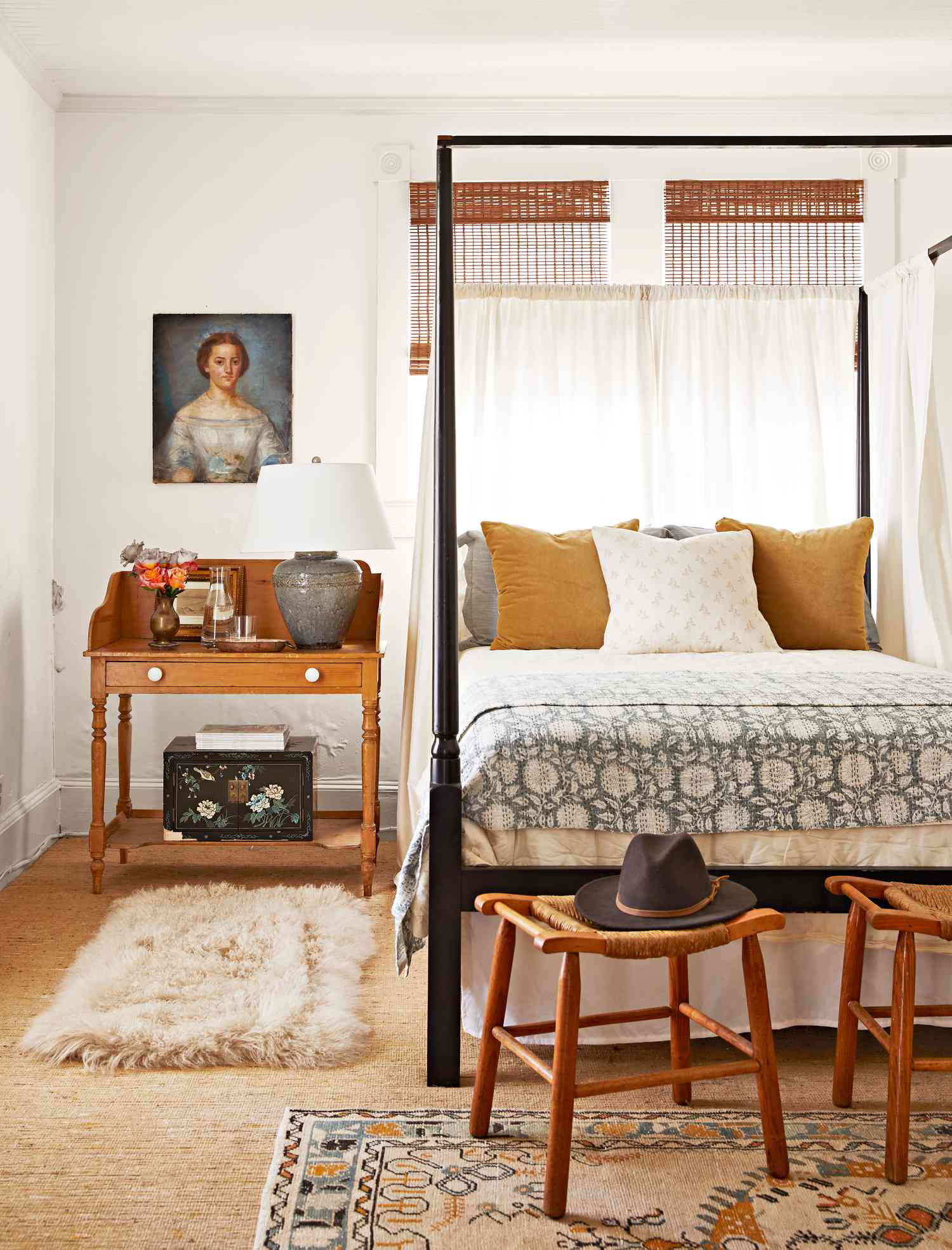
This room succeeds through smart contrast and scale. The dark, strong lines of the metal canopy bed create a striking architectural frame that draws the eye and adds height, yet because it is an open frame, it never feels heavy or bulky. That dark structure contrasts beautifully with soft, light-colored walls and bedding. A large woven rug adds a substantial dose of natural texture, grounding the whole space so it never feels stark or cold, a genuinely balanced mix of hard and soft.
Final Thoughts on Making a Small Room Feel Bigger
Making a small room feel special was never about one magic trick. It comes down to choosing details that tell your story, whether that’s a bold accent wall, a clever built-in, or simply the right cozy textiles. Do not be afraid to choose what actually reflects you.
Feeling inspired? Pick your favorite idea from this list and save it to your Pinterest board. That is the first step toward turning inspiration into your own room.